
In the early 1990s, downloading software was not something you did casually while making coffee. It was a ritual. You dialed into a bulletin board, listened to the modem negotiate its strange electronic handshake, chose a file, started the transfer, and hoped nobody in the house picked up the telephone before it finished. A single archive could take minutes, sometimes much longer. A failed download was not a minor inconvenience; it was wasted time, wasted phone charges, and often a small personal defeat. That world made compression matter in a way that is hard to feel now. An archiver was not just a technical utility. It was part of the social infrastructure of computing. It decided how software travelled from one bedroom coder to another, from a public-domain library to a user group disk, from a BBS in one country to a teenager with an Amiga 500 in another. On the PC, the format that came to define this culture was ZIP. On the Amiga, it was LhA.
The Amiga did not simply follow the PC
The Amiga was never a machine that comfortably lived in somebody else’s shadow. It borrowed from the wider world when useful, but it also had its own habits, its own file managers, its own disk culture, its own command-line tools, and its own idea of what felt elegant. This is why the question of LhA versus ZIP is not only a question about compression ratios. It is a question about identity, timing, and trust. ZIP was strongly associated with the IBM PC and MS-DOS world. It became famous through PKZIP, and for good reason: it was fast, useful, and eventually almost universal. But universality does not happen everywhere at the same speed. By the time ZIP became the obvious choice for much of the wider computer world, the Amiga community had already settled into another rhythm. Amiga users could unpack ZIP files when they needed to, especially when dealing with PC software or cross-platform archives, but ZIP often felt like something from outside the neighbourhood. LhA felt local.
What LhA got right
LhA arrived on the Amiga at the right moment and in the right form. The Amiga implementation associated with Stefan Boberg was not just a lazy port from another platform. It was fast, practical, widely available, and sensitive to the way Amiga users actually stored and exchanged software. It worked well on modest machines, which mattered enormously because many people were not using accelerated dream systems. They were using everyday Amigas with limited memory, floppy drives, and patience that had already been tested by slow transfers. Just as importantly, LhA respected the Amiga’s filesystem culture. Amiga users cared about directories, timestamps, protection bits, file comments, and the small pieces of metadata that helped software arrive intact. A careless archive could unpack the visible files but still damage the character of a package. It could break assumptions made by scripts, installers, or utilities. LhA became trusted because it preserved enough of the Amiga way of doing things that users did not have to worry about it every time they downloaded something new.
Aminet turned habit into standard
No single company declared LhA the official Amiga archive format. There was no grand committee, no glossy standards document, no executive decision from Commodore that made it so. Its authority came from use. People uploaded in LhA because other people expected LhA. People installed LhA because the files they wanted were packed with it. BBS sysops, public-domain libraries, magazine disks, and software authors all helped strengthen the loop. Aminet made that loop enormous. As the great Amiga software archive grew, it became one of the central institutions of the post-commercial Amiga world. If you wanted utilities, patches, datatypes, demos, icons, development tools, music software, or strange little programs that solved exactly one problem beautifully, you went to Aminet. And when you went there, you saw .lha everywhere. The format became invisible through familiarity, which is usually the surest sign that a standard has won.
Why ZIP did not take over
ZIP’s failure to become the native Amiga standard was not really a failure of ZIP itself. The format was good, and the tools around it were useful. The problem was that ZIP arrived in the Amiga scene as an outsider competing against something that was already convenient, already trusted, and already woven into distribution habits. Once an archive format becomes the default assumption of a community, replacing it requires more than technical merit. It requires a strong reason for everyone to change at once. That reason never fully arrived. LhA compressed well enough. It was fast enough. It was available enough. It handled Amiga needs well enough. Those words, “well enough,” may sound modest, but in computing history they are powerful. Many standards are not crowned because they are perfect. They win because they are dependable at the moment when everybody needs to agree.
The rivals that stayed on the edges
The Amiga had other archivers, and some had real strengths. ARC had history but increasingly felt old. Zoo had its supporters. ARJ appeared here and there. DMS became important for whole-disk images rather than ordinary file collections. Later, LZX earned admiration because it could often compress better than LhA, especially among power users who cared deeply about squeezing every last byte. Yet none of them replaced LhA as the common language of everyday software exchange. That is the cruel truth for technically superior challengers: once a community has standardized on a format, the challenger has to be not merely better, but better enough to overcome inertia. LZX may have impressed people, and ZIP may have connected Amiga users to the wider world, but LhA was already sitting in the middle of the Amiga’s public software economy.
A people’s standard
What makes LhA’s rise interesting is that it was not imposed from above. It spread the way many real computer customs spread: through usefulness, repetition, and recommendation. One user told another user which archiver to install. One upload guide influenced thousands of uploads. One file manager added support because users expected it. One magazine disk included the tool, and another generation of users learned the habit. That kind of standard has a different emotional texture from a corporate format. It feels less like a rule and more like a shared handshake. If you sent someone an LhA file, you were speaking Amiga. You were saying: this should unpack properly on your machine, in your environment, using the tools you probably already have.
The feeling of LHA
For many Amiga users, LhA is not just an extension. It is a memory trigger. It recalls long download lists, Fish disks, Aminet directories, Workbench drawers full of experiments, and the thrill of discovering that someone, somewhere, had written exactly the little utility you needed. It recalls the peculiar generosity of the public-domain and shareware scene, where the machine stayed alive because its users kept feeding it with software. That is why the LhA story still matters. Compression formats are normally boring technology, the sort of thing people only notice when they fail. But on the Amiga, LhA became part of the culture. It was the wrapping around thousands of small gifts: paint programs, tracker tools, icon sets, game patches, demos, datatypes, libraries, shell commands, and personal projects that travelled from one enthusiast to another.
The verdict
LhA became the Amiga standard because it matched the Amiga’s moment. It was early, practical, fast, Amiga-aware, and widely adopted before ZIP became unavoidable elsewhere. It suited the machines people actually owned, the networks they actually used, and the software culture they actually lived in. ZIP won the larger war. It became the common archive of the mainstream computing world. But LhA won something more particular and, in its way, more intimate. It became the archive format of a community that had always done things slightly differently. On the Amiga, lha was not just a compressed file. It was a sign that the package belonged.
MORE AMIGA & RETRO NEWS
 AmiPulse SFX turns the Amiga into a retro sound effects workshop
 New Directory Opus 5.100 update adds FTPS support for Amiga users
 Amiga boot viruses explained: SCA, Byte Bandit and disk infection
 The return of Directory Opus: Amiga’s legendary file manager gets new life
 G-Copy 0.8 adds new features for Amiga floppy disk preservation
 CGA graphics explained: the first color graphics standard for IBM PCs
 Amiga public domain software: the freeware scene that powered the Amiga community
 Retro gaming archive Myrient to close amid rising costs — don’t blame AI just yet
 A publishing platform without a plan: why the Amiga never became the standard
 Amiga’s classic filesystems find new life on Linux and macOS
 From dust to boot: the only known Unix V4 archive revived
 The art of cracking Amiga games: techniques and impact on the Demoscene
 5 Most influential Commodore Amiga programs
 Cloanto’s Amiga Forever 7: The ultimate ‘80s retro revival experience
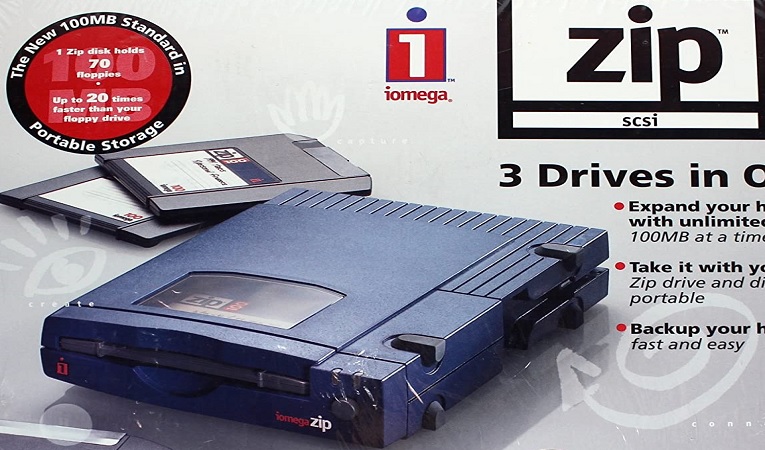 Using the legendary Iomega’s Zip drive on the Amiga