
By the time seaQuest DSV arrived on television in 1993, science fiction was changing. For decades, the genre had relied on physical models, optical compositing, matte paintings, smoke, lights, wires and clever camera work. Those techniques had produced some of the most memorable images in screen history. But a new kind of effects work was beginning to appear — quieter, stranger, and far less visible to the audience. It was happening on desktop computers. What most viewers did not know was that many of those images owed a debt to the Commodore Amiga. Not the basic Amiga remembered by many as a games machine, but expanded Amiga 2000 workstations, fitted with 68040 accelerator cards, running NewTek’s Video Toaster and LightWave 3D. In a small production pipeline built for speed and survival, those machines helped create some of the show’s signature exterior shots. This was not a toy pretending to be a studio. It was a studio being rebuilt from unlikely parts.
A home-computer revolution with broadcast ambitions
The Amiga had always been unusually good with graphics and video. Long before most home computers were comfortable with animation, colour and moving images, the Amiga had a natural feel for them. That made it attractive not only to gamers and demo-scene artists, but also to video producers looking for cheaper, more flexible ways to make television.
NewTek’s Video Toaster pushed that possibility much further. Installed in an Amiga, it turned the computer into a compact video-production system: part switcher, part effects unit, part graphics machine, part animation tool. For small studios, local broadcasters and ambitious production teams, it offered something radical — professional-looking video work without the traditional professional price tag. Then came LightWave 3D.
Bundled with the Video Toaster before becoming a major 3D package in its own right, LightWave gave artists the ability to model, animate and render computer-generated objects on desktop hardware. At a time when high-end 3D work was usually associated with expensive specialist workstations, this was a serious change in the balance of power.
By the early 1990s, the Video Toaster and LightWave combination had become one of the secret engines of television effects. It did not make hard work disappear. It did not turn small teams into Hollywood giants overnight. But it gave them a fighting chance. SeaQuest DSV arrived at exactly that moment.
The test that changed the plan
The original expectation for a show like seaQuest might have been to use traditional model work. That would have made sense. A large futuristic submarine could be built as a miniature, lit carefully, filmed on a motion-control rig and composited into shots. But the production needed a lot of exterior views. A weekly series could not treat every undersea shot like a feature-film set piece. It needed repeatable, flexible imagery. It needed to move fast.
A computer-generated test changed the direction of the show. The early CGI demonstration was produced using LightWave 3D on an Amiga 2000. It showed that the seaQuest submarine could be created digitally and that the approach might work for television. That test helped convince the decision-makers that desktop CGI was not merely a curiosity. It could carry a network series.
From there, a small Amblin Imaging team began building a workflow around expanded Amiga systems.
One of the artists, Fred Tepper, came into the production in a way that feels very specific to the era. He bought an Amiga 2000, borrowed a Video Toaster, learned LightWave from the manual, and developed the skills needed to work on the show. That was the early desktop-CGI world: part professional discipline, part self-taught obsession. The future was being built by people who were learning the tools almost as quickly as they were using them.

The machines behind the ocean
The Amigas used on seaQuest were not stock machines sitting under a teenager’s bedroom desk. They were expanded Amiga 2000 systems, upgraded with 68040 accelerator cards and connected into a production pipeline.
The 68040 acceleration mattered. Rendering 3D animation was brutally demanding for the time. Even at standard-definition television resolution, a single frame could take from half an hour to several hours to render. A shot was not something casually tried, discarded and tried again. Every camera move, every light, every surface and every texture had to be planned with care.
To keep production moving, the team used a render farm. Early accounts describe around 20 Amiga systems working together during the first season, with the setup later growing larger under the pressure of weekly television deadlines. These machines would render frames in sequence, slowly assembling the digital submarine shots that appeared on screen. The process was practical, improvised and often unforgiving.
Large models could be too heavy to load all at once, so the artists used only what the camera needed to see. If the seaQuest passed close to camera, sections of the submarine might be loaded in pieces. If it appeared in the distance, a simpler version could be used. Detail was rationed. Memory was guarded. Every shot was a negotiation between ambition and hardware.
That limitation shaped the look of the show. The submarine’s motion had to be readable. The lighting had to sell scale. The camera moves had to suggest weight. The machine could not do everything, so the artists had to make smart choices.
How the shots were made
The core 3D work was done in LightWave 3D. Artists modeled the vessels, animated their movement, lit the scenes and rendered the finished frames. Unlike modern CGI workflows, there was little room for instant feedback. Wireframe previews helped with timing and composition, but final images took time.
Much of the compositing was also handled inside LightWave. Today, an effects shot might pass through several specialised applications: modelling, animation, rendering, simulation, compositing, grading and finishing. On seaQuest, the pipeline was much more compact. In many cases, foreground and background elements were assembled within the 3D scene itself, and the final shot was rendered as a complete image.
The Amiga also played a role beyond the submarine shots. Deluxe Paint, one of the great Amiga art programs, was used for drawing and texturing work. On-set display graphics and interface elements were driven by Amiga-based tools as well. The show’s futuristic bridge screens, readouts and computer graphics were part of the same broader ecosystem.
There was some work outside the Amiga world. Certain textures and design elements were created using Macintosh-based Photoshop. But the heart of the early production pipeline remained Amiga, Video Toaster and LightWave.
That made seaQuest a fascinating hybrid: a big-budget network series with part of its visual identity coming from the same creative culture that had powered bedroom animation, demo disks and independent video experiments.
The people behind the pixels
A machine did not make seaQuest. People did. Production designer Richard Lewis helped push the show toward a computer-generated approach when traditional model work still seemed the obvious path. Joe Conti was involved in the early LightWave test that helped prove the concept. Fred Tepper became one of the key artists working inside the Amiga-based pipeline. Ron Herbst contributed to graphics work. Jennifer McKnew created important texture work, including the skin of the seaQuest itself, with input from Jim Lima, whose design sensibility helped shape the show’s sleek undersea look.
Then there were the engineers and software specialists who solved less glamorous but equally important problems. Getting a rendered image out of LightWave was only part of the job. Those images had to survive the trip into professional broadcast video. That meant moving frames from Amiga renders into formats and systems used by television post-production facilities. Tools such as ADPro helped bridge that gap, allowing the digital artwork to enter a broadcast pipeline involving tape, video disk systems and NTSC television standards. That bridge was vital. Without it, the Amiga images would have remained impressive computer graphics rather than finished television.
The blue-green problem
SeaQuest had one technical enemy that space shows did not face in the same way: water. Outer space is forgiving. A black background hides many sins. Starfields, hard highlights and sharp silhouettes can make computer-generated spacecraft feel convincing even when the underlying technology is limited.
Underwater imagery is different. It depends on gradients, haze, muted light, drifting colour and subtle shifts in blue and green. Those tones are beautiful, but they are dangerous in old broadcast video. What looked smooth on a computer monitor could become blotchy, muddy or banded on a television set.
That became a serious problem for seaQuest. The show’s dark underwater palette, so central to its mood, did not always survive the NTSC broadcast chain cleanly. Blue-green scenes could break apart visually. Smooth digital water could turn into ugly patches of colour.
The solution involved reworking the way the images were converted for video, using dithering techniques to preserve the appearance of the original 24-bit renders. It was an invisible fix, but an essential one. Without that kind of engineering, the show’s digital ocean could have collapsed before it reached viewers at home.
This is one of the most important parts of the story because it shows what early CGI really involved. It was not only artists making cool images. It was also engineers fighting colour space, video standards, storage formats, render times and hardware limits. The magic was technical before it was visual.
Why seaQuest mattered
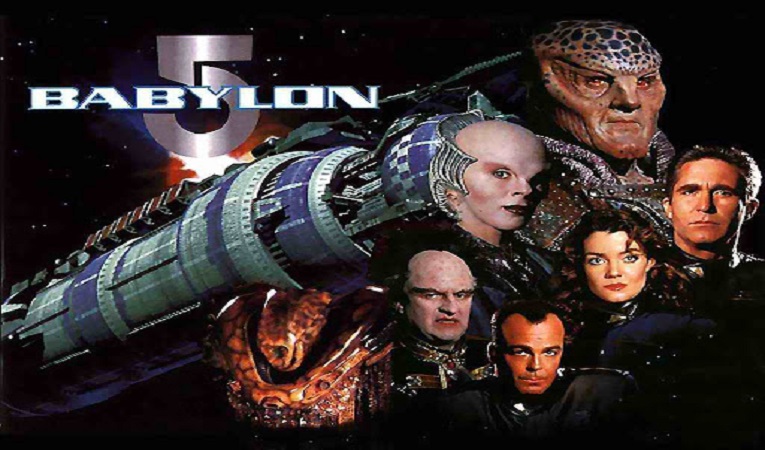
Babylon 5 is often remembered as the great breakthrough for desktop CGI on 1990s television, and rightly so. Its space battles and computer-generated ships proved that a weekly series could build an ambitious visual universe without relying entirely on traditional models. But seaQuest DSV deserves a place in the same conversation.
Its challenge was different. It had to make a digital submarine feel heavy, slow and enormous. It had to create a world not of stars and laser fire, but of pressure, depth and darkness. It had to suggest water with tools that could not truly simulate water in the modern sense.
That is why the show’s effects remain historically interesting even when they look dated today. The images have the softness and smoothness of early CGI. The textures are sometimes simple. The lighting can feel artificial. The water occasionally looks more like a digital dream than the sea. But those flaws are part of the evidence. They show a young medium learning how to work under pressure. The Amiga did not make seaQuest effortless. It made it possible.
The hidden legacy of the Amiga
The Amiga’s role in 1990s television effects is easy to overlook because it sits awkwardly between categories. It was a home computer, but also a video machine. It was loved by gamers, but used by professionals. It belonged to hobby culture, but helped create broadcast imagery. That dual identity is what made it powerful.
In the hands of artists and engineers, the Amiga became more than a computer. It became a way into the industry. It lowered the cost of entry. It let smaller teams attempt work that previously belonged to expensive facilities. It made experimentation cheaper and faster. It encouraged people to learn by doing. For a generation of digital artists, machines like the Amiga 2000 were not nostalgic toys. They were workstations, classrooms and production tools. SeaQuest DSV captures that moment beautifully. On screen, it was a story about the future of the oceans. Behind the scenes, it was part of another future entirely: the future of desktop production.
From the Toaster era to today
The ideas behind the Video Toaster did not disappear. Modern live-production systems, streaming studios, virtual sets, low-cost editing suites and desktop 3D tools all carry some part of the same philosophy: give powerful media tools to more people, in smaller spaces, at lower cost.
Today, a laptop can edit high-resolution video, render complex 3D scenes, composite effects, stream live broadcasts and generate graphics in real time. That feels normal now. In 1993, it was close to revolutionary.
That is why seaQuest remains important. Not because every shot still convinces the modern eye. Not because the Amiga secretly did everything. But because the show sits at a turning point, when television effects began moving from specialist rooms into desktop workflows. Somewhere in that transition was a room full of expanded Amiga 2000s, running LightWave, rendering slowly, solving problems one frame at a time. When the seaQuest glided through the deep, it was not only a fictional submarine crossing the ocean floor. It was a signal from a particular moment in computer history — when affordable digital tools began to change television, and when the Amiga, of all machines, helped carry Hollywood underwater.
MORE AMIGA & RETRO NEWS
 The story behind Tony Hawk making music on a Commodore Amiga 2000
 Beyond Europe: how the Commodore Amiga built its hidden legacy in the USA
 Tim Jenison and NewTek: how the Video Toaster gave the Amiga a business market
 Amiga UNIX: the story of Commodore’s forgotten UNIX Workstations
 Why Apple Pippin failed: the story of Apple’s forgotten games console
 Japan’s Ugo Ugo Rūga the Japanese kids TV show powered by the Commodore Amiga
 The unknown Amiga: MagicBox AlphaGen, a forgotten Amiga broadcast system
 March 1987: Commodore launches the Amiga 2000, its first truly professional computer
 The forgotten story behind Nintendo’s Grundig disclaimer in Germany
 From Commodore Amiga to TV screens: the digital effects behind the Animaniacs opening
 10 Music legends who started producing with Commodore Amiga computers
 How the Commodore Amiga was used by NASA: the untold space technology story
 The machine that opened the studio door: how the Amiga democratized computer arts
 Video Toaster: How Amiga changed the television industry in the 90s
 Galactic dreams on an Amiga: the Commodore legacy of Babylon 5