
In the history of Commodore Amiga hardware, the famous names usually sit at the centre of the motherboard. Agnus, Denise, Paula, Lisa and Alice tend to get the attention, because they carried the Amiga’s graphics, sound and custom-chip identity. Yet around those headline chips sat smaller components that made the machines practical in the real world. One of the most important was Sony’s CXA1145 video encoder, a compact analogue IC used to turn the Amiga’s RGB video into a composite signal suitable for ordinary televisions and video equipment. The Sony CXA1145 was not glamorous. It did not draw sprites, move bitplanes or define the Amiga’s creative reputation. Its job was more practical: take clean red, green and blue video information from the computer and package it into a standard composite video output. In machines such as the Amiga 600, Amiga 1200 and Amiga CD32, that mattered enormously. It gave Commodore a reliable route from computer-grade video to the domestic television sockets that many buyers actually used.
The job: turning RGB into composite video
The Amiga’s graphics system was naturally comfortable with RGB. Separate red, green and blue signals preserve more detail and colour clarity than composite video, which combines brightness, colour and synchronisation information into a single signal. For a monitor, RGB was the better choice. For the mass market, composite was often the safer one.
The Sony CXA1145 sat between these worlds. It accepted analogue RGB and sync information, then generated a composite video output that could be sent to a yellow RCA socket, a TV modulator circuit or other consumer video hardware. In simple terms, it translated the Amiga’s internal video language into the language understood by everyday televisions, VCRs and capture devices of the era.
This conversion was not just a matter of joining wires. Composite video has to carry luma, chroma, colour burst timing and sync in a single waveform. The encoder had to respect PAL or NTSC timing, depending on the market and machine configuration. That made the CXA1145 a highly useful part for manufacturers who needed a ready-made, predictable video solution without building the whole encoder from discrete circuitry.
Sony’s role in Commodore’s video chain
Sony’s role was that of a semiconductor supplier, not the designer of the Amiga platform. Commodore designed the computers, chose the video architecture and integrated the encoder into its boards. Sony provided the specialist video IC that made the analogue output section easier to build, test and manufacture.
That distinction matters. The Amiga’s visual personality came from Commodore’s custom chipset. Sony did not create the Amiga look. What Sony supplied was the conversion stage that allowed that look to appear on consumer television hardware. The CXA1145 was a bridge chip: small, standardised and easy to overlook, but essential to the way many users experienced the machine.
For Commodore, using a proven Sony encoder reduced risk. Video output is a sensitive part of any home computer. Poor colour decoding, unstable sync, noisy composite output or weak compatibility with televisions could turn a powerful machine into a frustrating product. By designing around an established RGB encoder, Commodore could focus on the larger system while relying on a specialist manufacturer for the analogue television interface.
Composite video was technically inferior to RGB, but commercially vital. Many Amiga owners did not own dedicated RGB monitors. Many families already had a television. Many shops demonstrated computers through consumer displays. A machine that could plug into ordinary video equipment had a wider addressable market, especially in homes where a computer monitor was an expensive extra.

The Amiga 600: compact machine, practical output
The Amiga 600 arrived as a smaller, cost-conscious machine, designed for a market that expected compatibility and convenience. It kept the Amiga identity but packaged it in a more compact form. In that design, the Sony CXA1145 helped maintain familiar video outputs without forcing Commodore to reinvent the analogue section.
Inside the A600, the video encoder took the machine’s RGB information and helped produce composite output for the colour video connector and related television circuitry. The user did not need to know that a Sony IC was involved. From the outside, the value was obvious: connect a cable, tune or select the right input, and the Amiga display appeared.
The importance of that simplicity should not be underestimated. By the early 1990s, home computer buyers were less patient with technical awkwardness. A compact Amiga that could work with existing home video equipment had a much better chance of feeling approachable. The CXA1145 helped make that possible.
The Amiga 1200: advanced graphics, familiar sockets
The Amiga 1200 moved the platform forward with the AGA chipset and more capable graphics. Yet even as the machine improved its internal video capabilities, it still needed to speak to the outside world. RGB remained the premium output for clarity, especially through compatible monitors and SCART-equipped displays, but composite video remained part of the everyday connection story.
Here again the Sony CXA1145 performed a practical role. It formed part of the analogue video section that allowed the A1200 to provide composite output alongside its sharper RGB options. For users with the right monitor, RGB showed the machine at its best. For users with a standard television or video capture setup, composite made the machine usable immediately.
That balance was very Commodore. The company had to serve enthusiasts, gamers, schools, bedroom musicians and households with different budgets and equipment. A single video strategy would not have been enough. The CXA1145 helped the A1200 cover more of that ground.
RGB gave the Amiga its cleanest analogue picture. Composite gave the Amiga reach. The Sony CXA1145 sat at the point where those priorities met. It did not improve the graphics chipset, but it helped make those graphics visible on the screens people already owned.

The CD32: console ambitions and television reality
The Amiga CD32 made the CXA1145 even more relevant. Unlike the A600 and A1200, the CD32 was sold as a games console. That meant television output was not a fallback; it was central to the product. A console had to connect easily to the living-room display, and the video encoder became part of that consumer expectation.
In the CD32, the CXA1145 sat in the video output path after the machine’s graphics and video DAC stages. It helped generate the signals used for composite video and, in the CD32’s case, also formed part of the broader consumer video output arrangement that included S-Video and modulation. The chip’s role was still technical, but its business importance was clear. A console that could not deliver a stable television picture was not a console ready for retail shelves.
The CD32’s use of the Sony encoder shows how Commodore leaned on established analogue video practice at a time when digital display standards were still far away from the home market. HDMI did not exist. Flat panels were not normal. The living room belonged to CRT televisions, and the CXA1145 was a sensible way to feed them.
Why Commodore chose a chip like the CXA1145
A company such as Commodore could have built more of the encoder circuit itself, but that would have added complexity, board space, testing effort and manufacturing risk. The CXA1145 condensed a specialised task into a known component with a documented application circuit. For a manufacturer trying to manage cost and production speed, that was attractive.
The chip also supported the international nature of Commodore’s market. PAL and NTSC requirements complicated video hardware, especially for a company selling across Europe, North America and other regions. A flexible encoder IC helped standardise part of the design while allowing regional configuration through surrounding components and clocking choices.
This was typical of good hardware engineering. The best solution was not always the most bespoke one. Often it was the part that did a narrow job well, could be bought in quantity, and behaved consistently across production runs.

The picture quality question
Composite video from an Amiga was never the ultimate way to view the machine. It could soften text, blur colour edges and introduce artefacts that were not present over RGB. Users who connected an A1200 or A600 to a proper RGB monitor often saw a sharper, more stable image. That was not a failure of the CXA1145 so much as a limitation of composite video itself.
The encoder’s job was to create a compatible signal, not to overcome every compromise of the format. Composite video was designed for broadcast and television convenience, not pixel-perfect computer graphics. The Amiga’s colourful, high-contrast output could expose those weaknesses, especially in Workbench screens with fine text or games with sharp colour transitions.
Still, for games, demos and television use, the result was acceptable and often entirely adequate. The CXA1145 made the Amiga visible on the hardware people had. In a mass-market machine, that sometimes mattered more than technical purity.
Today, the Sony CXA1145 is familiar to many Amiga repairers because it sits in a vulnerable part of ageing boards. Composite video faults on A600, A1200 and CD32 systems can involve the encoder itself, nearby capacitors, filters, traces or supporting components. The chip has become a reference point in modern diagnostics, especially when RGB still works but composite or TV output does not.
Sony, Commodore and the wider electronics ecosystem
The presence of a Sony chip inside a Commodore machine is a reminder that classic computers were never built by one company alone. Even iconic systems were networks of suppliers, standards and specialist components. Commodore’s custom chips gave the Amiga its identity, but Sony, Motorola, RAM vendors, logic-chip makers and analogue component suppliers all contributed to the finished product.
Sony’s importance in this specific area came from its strength in video electronics. The company understood consumer video at component level, and its encoder ICs appeared in several systems beyond the Amiga world. For Commodore, buying that expertise as a chip made practical sense. It was cheaper and safer than treating composite encoding as a fresh internal project.
This kind of supplier relationship is easy to miss because it does not create a marketing story. Buyers saw Commodore on the badge and Amiga on the box. But inside the machine, Sony helped handle one of the most visible parts of the user experience: the actual picture on the screen.
Why the CXA1145 still matters
The Sony CXA1145 matters because it explains how the Amiga moved from chipset output to household display. It was not the star of the machine, but it was part of the route between the star and the user. Without video encoding, the graphics system remains an internal achievement. With it, the machine becomes something a child, musician, gamer or hobbyist can plug into a television and use.
In the A600, the chip supported a compact home computer that needed broad display compatibility. In the A1200, it gave a more advanced Amiga a familiar consumer output. In the CD32, it helped Commodore present Amiga-derived hardware as a living-room console. Across all three, Sony’s CXA1145 served the same purpose: translate good RGB video into a form the mass market could accept.
That is the understated importance of the chip. It did not make the Amiga powerful. It made the Amiga practical. For a computer platform trying to survive in homes, shops and living rooms, that practical work was not secondary. It was part of the product.
MORE AMIGA & RETRO NEWS
 Retro Passion starts selling fully built Amiga A600 Junior motherboards
 Ghosts’N Goblins AGA Amiga port gets CD32 release and control improvements
 Could Akiko have saved the Amiga CD32 from PlayStation and Sega Saturn?
 Commodore Amiga CD32 MegaRace port resurfaces after 32 years
 Japan’s Ugo Ugo Rūga the Japanese kids TV show powered by the Commodore Amiga
 Gary in the Commodore Amiga 500: the overlooked chip that made the system work
 How a Commodore Amiga 2500HD powered a KPLC weather forecast in the early 90s
 ARMSID back in stock: modern SID chip replacement for the Commodore 64
 The Motorola 68000 explained: the chip behind the Amiga’s power
 The secret behind Amiga performance: Chip RAM, Fast RAM, and Slow RAM
 PowerShark: A next-generation power adapter for the A500, A600 and A1200
 Video Toaster: How Amiga changed the television industry in the 90s
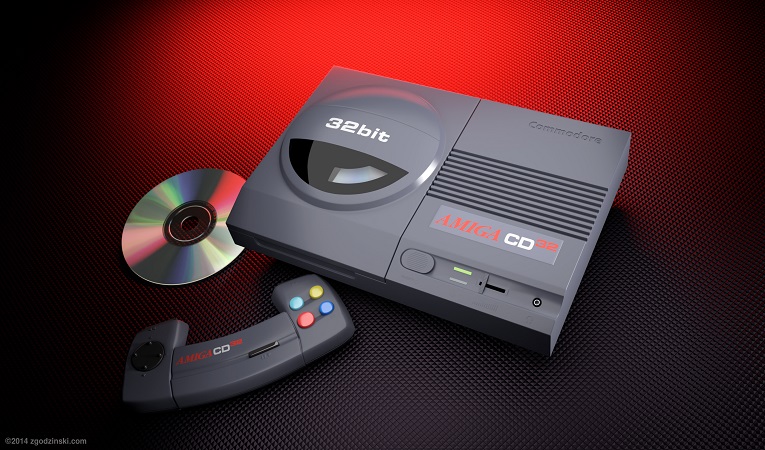 TF360 Prototype: The fastest 68k Amiga CD32 ever unleashed
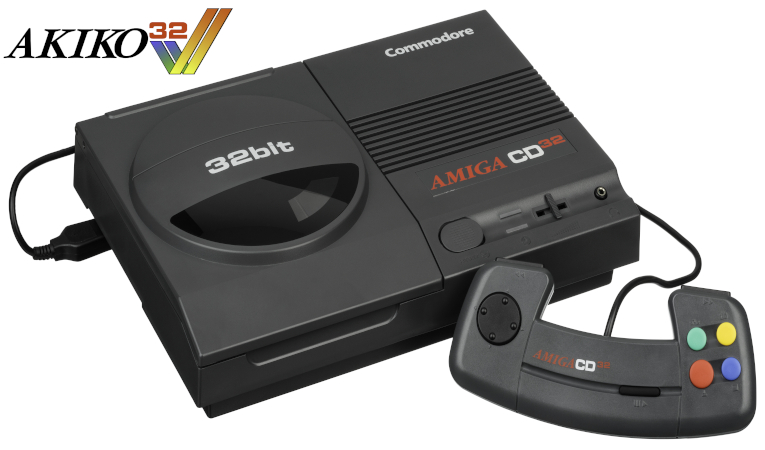 Akiko32: Replica of Amiga CD32 in final development phase
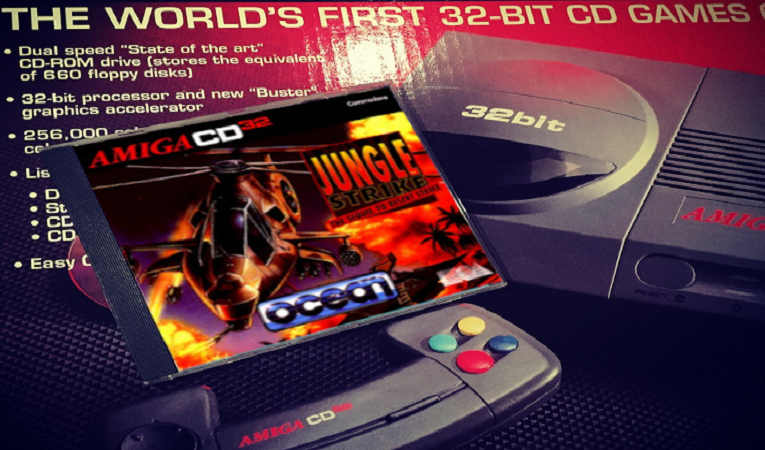 Download all Amiga CD32 games and play them on PC or Mac