
The Commodore 64 continues to prove that old hardware can still carry new ideas, and Ultra Blazer 26 is a sharp example of why the C64 games scene remains so active in 2026. This vertical scrolling shoot ’em up does not try to disguise its retro roots or soften its arcade ambitions. Instead, it leans into fast action, direct controls, explosive enemy waves and a classic science-fiction setup built around one clear objective: fly forward, survive the assault and break through an alien robot empire before your home planet is lost. For players who follow modern Commodore 64 games, Ultra Blazer 26 arrives as a familiar but upgraded kind of release. It has the structure of an old-school arcade shooter, the pace of a score-chasing C64 action game and the presentation touches expected from a polished retro production. It is not a reinvention of the genre, but it is a confident reminder that vertical shooters still fit the machine remarkably well when the design is focused and the screen stays busy.
A classic C64 shooter with a modern retro polish
Ultra Blazer 26 is built around the kind of immediate play that defined many 8-bit arcade conversions and home computer originals. The player controls a fighter craft moving through hostile territory, dodging enemy fire, collecting power-ups and pushing through increasingly dangerous attack patterns. The premise is simple, but that simplicity works in its favour. The game wastes little time on explanation and puts the emphasis where it belongs: movement, shooting, survival and scoring.
The production has been remastered using SEUCK Redux, giving the game a more complete feel than a basic construction-kit shooter. That matters, because many C64 players can immediately spot the difference between a raw SEUCK project and one that has received extra attention through presentation, front-end work, enemy behaviour and screen effects. Ultra Blazer 26 benefits from those additions. The result is a game that feels more carefully packaged, with a loading presentation, a front end, a high-score table and additional sequences for the start, game over and ending moments.
The mission across four dangerous zones
The story gives the action a straightforward arcade framework. A robotic empire created by the Xelerons has invaded the player’s home planet, and the mission is to fight through four different zones before taking on the creators themselves. That structure gives Ultra Blazer 26 a clear campaign shape, even though the main appeal remains the moment-to-moment shooting.
Each zone is designed to keep the pressure on the player. The screen scrolls vertically, enemies arrive in waves, and the player has to make quick decisions about when to hold position, when to weave through fire and when to chase useful pickups. It is a familiar rhythm for shoot ’em up fans, but on the Commodore 64 the impact comes from how well the game keeps the flow moving. A good C64 shooter needs to balance spectacle with readability, and Ultra Blazer 26 appears focused on maintaining that balance through colourful action, explosive feedback and steady escalation.
The final objective adds a useful layer of tension. Players are not simply clearing enemies until the screen stops moving. They must locate weak spots and keep firing long enough to destroy the larger threat behind the invasion. That gives the later stages a more deliberate feel and encourages players to stay alert rather than relying only on reflexes.

One or two pilots in the fight
A welcome feature is support for one or two players. Player one controls the blue fighter, while player two controls the red fighter. Co-operative play is an important addition for this type of game, especially on the C64, where local multiplayer still carries much of the social charm of the platform. Two-player shooting can turn a demanding arcade challenge into a louder, more chaotic and more enjoyable session, particularly when both players are trying to survive long enough to push into the later zones.
The two-player mode also gives Ultra Blazer 26 more replay value. Solo players can approach it as a score and survival challenge, while two players can treat it as a shared arcade run. That flexibility is useful for a modern retro release, because C64 games today are often played in different settings: on original hardware, through emulation, on modern recreations or during retro gaming events.
Power-ups, shields and score chasing
Ultra Blazer 26 keeps its upgrade system direct. Question mark icons deliver mystery power-ups, which can improve firepower or charge a temporary shield. This gives the player a small but important tactical layer. A stronger weapon helps clear enemies more efficiently, while a shield can save a run when the screen becomes crowded. Because the reward is not fully predictable, the player has an extra reason to take risks and move toward pickups instead of simply staying in the safest part of the screen.
Extra lives are awarded every 10,000 points, making score chasing more than a matter of pride. High scores are tied directly to survival, which is exactly how an arcade shooter should work. The better you play, the longer you last; the longer you last, the better your chance of seeing the later stages and improving your position on the high-score table. This loop is one of the oldest tricks in arcade design, but it remains effective because it gives every run a reason to continue.

PAL-only play and hardware compatibility
Ultra Blazer 26 is made for PAL Commodore 64 systems, which is an important technical note for players using original machines or emulators. Anyone running the game through VICE, Ultimate 64, theC64 Mini, the full-size theC64 or similar hardware should make sure the system is configured for PAL video. That requirement is common in the European C64 scene and helps ensure the game behaves as intended, especially where timing, music and scrolling are concerned.
Compatibility with modern C64 options is also significant. Many players no longer rely only on original disk drives and CRT displays. A release that works across original hardware, modern C64 recreations and popular storage solutions has a wider practical audience. That makes Ultra Blazer 26 easy to recommend to retro players who want a new C64 shooter without complicated setup.
A focused blast for C64 shooter fans
Ultra Blazer 26 does not need to overcomplicate its appeal. It is a vertical C64 shoot ’em up about blasting through enemy forces, collecting power-ups, chasing scores and surviving four hostile zones. Its strengths are clear: co-operative play, arcade pacing, polished presentation, useful power-ups and compatibility with several popular ways to play Commodore 64 software today.
For retro gamers, that is more than enough. Ultra Blazer 26 is a compact, energetic and well-presented shooter that understands both its platform and its audience. It offers the kind of straightforward action that made the C64 famous, while showing that the machine still has room for new missions, new explosions and new high scores in 2026.
MORE AMIGA & RETRO NEWS
 Metal Crisis preview: upcoming sci-fi shooter brings retro bullet hell action to PC
 Bubble Duck brings underwater shooter action to the Commodore 64
 Blazing Star retrospective: how SNK’s arcade shooter became legendary
 Jail Break Amiga AGA conversion brings Konami’s arcade shooter back
 Classic arcade shooter Moon Cresta gets an Amiga revival
 In the Hunt retrospective: revisiting a cult classic arcade shooter
 CyberBlocker Complete Edition brings retro arcade gameplay to modern consoles
 Section Z returns: new Amiga version of the Capcom arcade shooter in development
 Konami’s classic arcade shooter Devastators is coming to PS5, Xbox, and Nintendo
 Retro shooter Söldner-X 2 brings classic arcade action to Nintendo Switch
 This new Amiga shooter brings back 90s arcade chaos – Strike Force Omega
 Why hardcore arcade fans should keep an eye on GUN.DOG.REVENGE
 Project Horizon: the retro Amiga shooter bringing classic arcade action back
 Retro Arcade returns: Super Star Blast now available for Windows and AmigaOS4
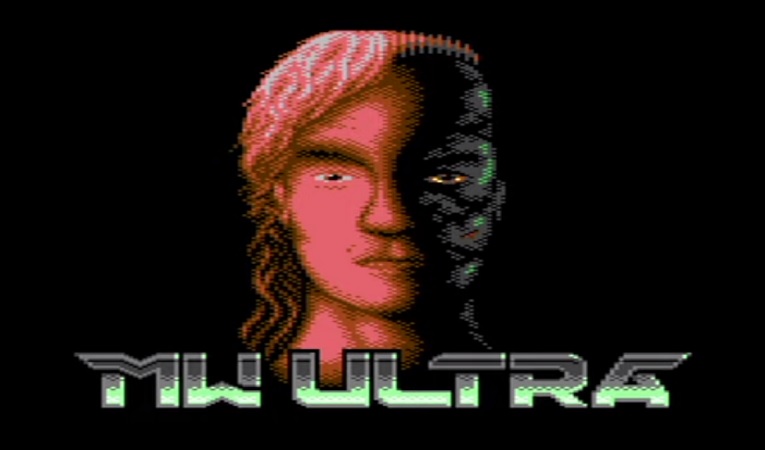 MW Ultra: New 2020 action game release for Commodore 64