
In 1990, Commodore looked at the ageing but still popular Commodore 64 and saw one more chance to squeeze value from a machine that had already done heroic service. The idea sounded tidy enough in a boardroom: take the C64, remove the keyboard, hide the computer ports, push cartridges instead of tapes, and sell it as a games console for the living room. What arrived was the Commodore 64 Games System, usually shortened to C64GS, a machine that had the soul of a home computer but had been dressed as a console and told not to talk about BASIC at parties. But the problem was brutally simple: the C64 was not only a games machine. It was a computer. Removing the keyboard did not make it modern. It removed one of the main reasons so many C64 games worked in the first place. The C64GS became a strange product caught between two worlds. It was too limited to be a proper C64 and too old-fashioned to scare Nintendo or Sega. It was a console that forgot it was a computer, and the market did not politely remind it.
Who made the Commodore 64 Games System?
The Commodore 64 Games System was made by Commodore, with the European market at the centre of the plan. It was not a new architecture, not a fresh games platform, and not a secret next-generation weapon. It was a repackaged Commodore 64, built to be cheaper, simpler and easier to sell as a dedicated games system.
Commodore’s thinking was understandable. By 1990 the original C64 platform had been around since 1982, which in games hardware years is roughly the age of a castle. Yet the machine still had momentum, especially in Europe, where budget C64 games on cassette remained common in shops and bedrooms. Commodore wanted to push the market towards cartridges, both to improve the user experience and to make software harder to copy. A cartridge-based C64 console could, in theory, keep the platform alive while offering a product that looked more like the consoles sitting under televisions.
The target was clear enough: families who wanted games, not a full computer. Commodore could offer a familiar name at a lower price than a standard C64 bundle and present it as a quick-loading, no-fuss gaming machine. It was a nice pitch. Unfortunately, the C64’s magic had never been about being no-fuss. It was about being flexible, cheap, programmable, hackable and supported by a mountain of software. Take away the keyboard and you do not just simplify the C64. You start cutting into the muscle.
How it was made
The C64GS was made in the most Commodore way imaginable: by reusing what already existed. Inside, it was very close to a Commodore 64C. The famous 8-bit heart of the machine remained. It still had the MOS 6510 processor, 64 KB of RAM, VIC-II graphics and SID sound. The broad computing DNA was there. What changed was the body.
The keyboard was removed. The case was redesigned into a low, console-like shell. The cartridge connector was placed for top loading, making the machine behave more like a console than a desk computer. Several familiar C64 expansion options were no longer exposed to the user. The cassette port, serial interface and user port were not part of the everyday experience. This was meant to stop the C64GS feeling like a computer with bits missing. Ironically, it made it feel exactly like a computer with bits missing.
The ROM was also altered so that the machine behaved more like a cartridge system. Switch it on without a cartridge and it did not greet you like a normal C64 ready for typed commands. It expected a game. The message was clear: this machine was here for cartridges, not for typing in programs from magazines while your tea went cold.
Each system was bundled with a joystick and a four-game cartridge. The pack-in selection helped show the promise of the format: instant loading, no tape squeal, no waiting, no adjusting volume levels on a cassette recorder like a safecracker. The games included International Soccer, Flimbo’s Quest, Klax and Fiendish Freddy’s Big Top O’Fun. As a sampler, it was not terrible. As a reason to buy a new machine, it was less convincing.

The keyboard problem nobody could dodge
The C64GS was technically compatible with much of the C64 world, but practical compatibility is where the wheels began to wobble. Many C64 games expected a keyboard at some point. Sometimes it was just to start the game. Sometimes it was needed for menus, level selection, high-score entry, pause, quit, controls, or copy protection. A normal C64 owner pressed a key and carried on. A C64GS owner stared at a plastic shell and wondered whether shouting RUN at it would help.
This was the central trap. Commodore had a huge library, but a huge library is only useful if people can actually play it. The C64GS needed games that avoided keyboard input entirely or had been carefully adapted for joystick-only control. That reduced the real catalogue dramatically. Publishers could convert games, but cartridges were more expensive to manufacture than tapes, and the installed base of C64GS machines was unknown. It was a risky business proposition before the first awkward loading screen had even appeared.
The supplied Cheetah Annihilator joystick tried to solve part of the control issue with an extra button arrangement, but it created its own little ecosystem problem. If a game depended on that second-button behaviour, replacement controllers were not always straightforward. A console should make controls simpler. The C64GS made them feel like a pub quiz category.
The software problem
Software support was always going to decide the fate of the C64GS. Commodore needed a strong cartridge line-up, ideally with games that looked current and felt made for the machine. What it mostly got was a mixture of conversions, compilations and cautious publisher support. Some titles were good, some were serviceable, and some exposed the uncomfortable truth that the machine was trying to sell old 8-bit technology in a market moving quickly towards more advanced console experiences.
Cartridge games had advantages. They loaded instantly, were harder to casually copy and felt more premium. But they were also more expensive to buy. That mattered. The C64’s late-life success in Europe was deeply tied to affordable cassette games. A child could build a collection without needing a bank manager, a financial adviser and a sympathetic grandparent. Cartridge pricing changed the psychology. Suddenly the C64GS was asking buyers to pay console-style software prices for a machine that was, underneath, still an old C64.
The regular C64 also remained a problem for the C64GS. Why buy the cut-down version when the full computer could play games, run educational software, use a keyboard, load tapes, connect disk drives and generally do more? Commodore was competing not only with Nintendo and Sega, but also with itself. That is a difficult fight to win, especially when your rival has the same chips and more keys.

A 1990 console with 1982 bones
By 1990, the C64’s hardware was still charming, capable and beloved, but the market around it had changed. Sega and Nintendo had built console ecosystems with clear branding, dedicated controllers and software pipelines designed around living-room play. The Mega Drive was already showing what 16-bit console gaming could look like. Against that, the C64GS felt like yesterday’s clever idea arriving after the meeting had ended.
That does not mean the C64GS was useless. The SID chip still gave it personality. Some C64 games remained excellent. For the right cartridge, the machine could be immediate and enjoyable. But the console business is not kind to products that require explanation. A good console says: plug this in and play. The C64GS said: plug this in and play, unless the game wants a key, or the cartridge was not adapted, or you wonder why the cheaper tape version works on the computer your friend already owns.
It was not a disaster because the C64 was bad. It failed because the C64 was too much of a computer to be turned into a simple console by removing parts. Commodore tried to make the machine more accessible by taking away complexity, but it also took away compatibility, flexibility and value.
Commercial impact for Commodore
Commercially, the C64GS did little to help Commodore and plenty to underline the company’s wider strategic problems. Estimates vary, but sales were poor by any sensible measure, and the machine disappeared quickly. Production expectations were far higher than actual demand, leaving Commodore with unsold stock and a product that had failed to create a new cartridge-led future for the C64.
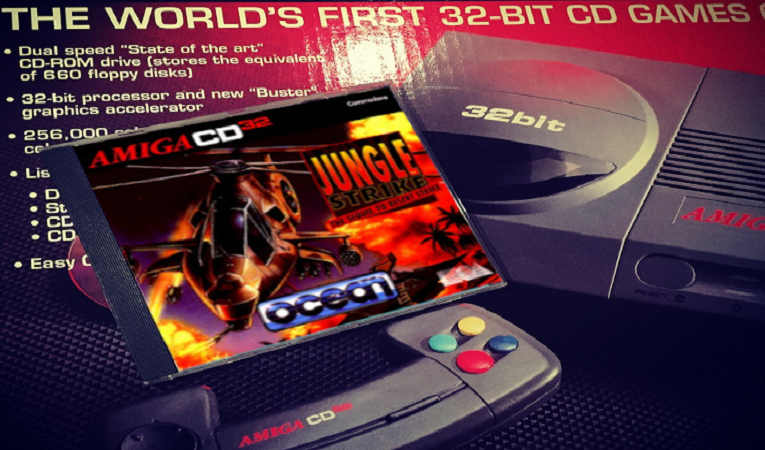
The financial damage was not the only issue. The C64GS also damaged confidence in Commodore’s ability to read the console market. And they will do it again in 1993, with the Amiga CD32. The company had one of the most successful home computers ever made, yet its console version arrived late, compromised and poorly positioned. It suggested a business trying to stretch an old platform rather than define a new one. For customers, it was confusing. For publishers, it was risky. For retailers, it was another box to explain. For Commodore, it was not the comeback move it needed.
There was also an opportunity cost. Time, marketing attention and manufacturing effort went into a machine that could not realistically change Commodore’s position. The company needed a clean games strategy. Instead, it produced a C64 without the keyboard and asked the market to applaud the empty space.

What Commodore got right
It would be unfair to say Commodore got everything wrong. The basic instinct behind the C64GS had logic. Instant-loading C64 games on cartridge were attractive. A cheaper living-room games machine had potential. The C64 brand still meant something. The hardware reuse kept development costs down. In a different year, with a stronger cartridge library and a design that preserved more compatibility, the idea could have had a better chance.
The C64GS also foreshadowed something modern retro fans understand well: people like simple access to classic games. A compact C64-style games box is not a ridiculous concept. The ridiculous part was asking 1990 buyers to treat a cut-down 8-bit computer as a fresh console while the rest of the industry was moving on at speed.
The legacy of the keyboardless C64
Today, the C64GS is more interesting than successful. Collectors like it because it is unusual, rare and slightly absurd in the way failed hardware often is. It tells us a lot about Commodore at the start of the 1990s: still resourceful, still attached to the C64, but increasingly unsure how to turn old strengths into new markets.
The machine’s story is not really about a bad console. It is about a good computer being forced into the wrong costume. Commodore tried to simplify the C64 for the console age, but the C64’s strength was never simplicity alone. It was a flexible, affordable, widely supported machine with a keyboard at the centre of its identity. Remove that, and the product became easier to package but harder to justify.
The Commodore 64 Games System remains a classic example of a company solving the visible problem while missing the deeper one. Yes, tapes were slow. Yes, cartridges were cleaner. Yes, the C64 still had games worth playing. But a console needs more than familiar chips in a new case. It needs purpose, software, timing and a clear reason to exist.
The C64GS had a cartridge slot, a joystick and a famous badge. What it needed was a keyboard, a stronger library, or a time machine. Preferably all three.
MORE AMIGA & RETRO NEWS
 Commodore Callback 8020: the flip phone that could turn nostalgia into a modern tech strategy
 Atari 800XL revival rumours grow after new trademark filing
 ModRetro M64 review: the retro console bringing Nintendo 64 gaming back this July
 Neo Geo+ AES revives the legendary SNK console that gamers never forgot
 Avoid these mistakes when buying a used classic gaming console
 Your retro console might be dying from dust – here’s how to fix it
 The best underrated turn-based strategy games for Commodore Amiga
 3DO console history: how a revolutionary system lost the console war
 How Sega predicted online console gaming in the 1990s—and arrived too soon
 Frozen in time: the Ice Machine cartridge returns to the Commodore 64
 GF-1 Neptune FPGA console slips into 2026 for ultimate polish
 September 1993: European launch of the first full 32-bit gaming console in the world
Atari 2600+ Returns: A modern-day recreation of a classic console
 Why blowing air into NES cartridges is gaming’s greatest urban legend
 UAE-X: turn your Xbox into a full Commodore Amiga experience*