
Long before AOL discs fell out of magazines and landed in millions of letterboxes, Commodore 64 owners were already going online. They used a service called Quantum Link, usually shortened to Q-Link. It offered email, live chat, software downloads, news, shopping and multiplayer games through an ordinary telephone line. The operator behind it, Quantum Computer Services, later changed its name to America Online. So yes, AOL’s story starts on an 8-bit computer. Q-Link launched in 1985, when going online still felt like a specialist activity. Most home computer users stored programs on cassette tapes or floppy disks. They swapped software with friends, bought magazines with printed listings and sometimes called local bulletin board systems with a modem. Q-Link offered something more organised. It put several online services behind one account, one piece of software and one monthly bill. That sounds ordinary now. Back then, it was a clever way to turn a modem from an expensive accessory into something people could use regularly.
Built around the Commodore 64
Q-Link wasn’t a general-purpose network that happened to support the Commodore 64. Quantum designed it specifically for Commodore machines, including the C64 and the later Commodore 128. That decision shaped the whole service.
Many online systems of the period relied on plain text, command prompts and numbered menus. They worked, but they often felt like business terminals. Q-Link looked more like a consumer product. It used colour, graphics and interface elements designed around the C64’s display.
The hardware still imposed strict limits. A Commodore 64 had 64KB of memory, and most users connected at just 300 or 1,200 baud. Data arrived painfully slowly by modern standards. A basic photograph would have taken ages to transfer, assuming the system could display it properly at all.
Q-Link worked around that problem by keeping parts of the interface on the user’s disk. The network didn’t need to send every menu, icon or screen element from scratch. It could transmit only the changing information. That saved time and telephone charges. It also made the service feel faster than it really was.
Getting connected
Using Q-Link required some preparation. You needed a Commodore computer, a modem, the Q-Link software and access to a telephone line. Then you dialled in.
The modem called a local or regional access number and established a connection with the service. Anyone who remembers dial-up will know the sounds: tones, clicks, bursts of static and the strange electronic handshake that meant the computers had found each other. Once connected, the Q-Link software presented a set of organised sections. Users could read messages, enter chat areas, check news, download files or start a game.
It wasn’t always open 24 hours a day. During its earlier years, Q-Link mainly operated in the evenings on weekdays, with longer sessions at weekends. That suited a service aimed at home users, but it also reflected the cost of running large computer systems and telephone networks. Pricing could get complicated.
The monthly fee covered basic access, while some sections carried additional per-minute charges. Stay too long in a premium area and the bill climbed quickly. Users also had to consider the cost of the telephone call, especially when the nearest access number wasn’t local. You watched the clock.
Email before it became ordinary
Electronic mail was one of Q-Link’s most practical features. Users could send messages to other subscribers without arranging a specific time to meet online. The recipient could read the message later, reply and continue the exchange at their own pace. That seems basic now. In 1985, it was a major shift.
Home computer communication had often depended on bulletin board systems. Each BBS had its own telephone number, rules, software collection and group of users. Q-Link brought messaging into a larger commercial system with central accounts and a consistent interface.
The service also supported live chat and short instant messages between connected users. These features later became standard parts of AOL, along with familiar ideas such as screen names and organised chat areas. Q-Link didn’t invent online conversation, but it packaged it for a home computer audience. That made a difference.
Software without the shop
Downloading software through a modem wasn’t fast, but it offered clear advantages. Q-Link maintained libraries of public-domain programs, utilities and other files for Commodore owners. Instead of ordering a disk by post or searching through unrelated bulletin boards, users could browse a central catalogue and download a program directly. Small files were manageable. Larger ones tested your patience.
A download could take several minutes or much longer, depending on the connection speed and file size. If the telephone line dropped, you might have to start again. There was no broadband router quietly retrying the transfer in the background. Still, the basic idea worked. Software could move from a remote computer to a home machine without physical media. The process showed what online distribution could offer, even when the technology remained slow and expensive. That model later became normal. On Q-Link, it still felt new.
Games over the telephone line
Games gave Q-Link another strong selling point. Subscribers could play chess, checkers, backgammon and word games against people in other locations. The graphics stayed simple, and response times depended on the modem connection, but the important part was the opponent. They weren’t sitting beside you.
Networked play had existed on university and research systems, but Q-Link brought it to a mainstream home computer platform. A C64 owner could connect after dinner and play against someone several towns or even several states away. Q-Link also hosted more ambitious projects.
Lucasfilm Games developed Habitat for the service, later released in a modified form as Club Caribe. It presented users with graphical locations, controllable characters, objects and text communication.
The system split the work between the home computer and the remote servers. The C64 stored much of the visual information locally, while the network sent updates about movement, actions and objects. That approach mattered because bandwidth was tiny. Habitat couldn’t stream a detailed world from a server. It had to use the C64 as an active part of the system, not just a screen and keyboard. The design anticipated techniques that later online games would use on much faster hardware.
Q-Link wasn’t the internet
People often describe Q-Link as an early internet service, but that description needs some care. Q-Link was a closed commercial platform. Quantum controlled the software, accounts, content, billing and available services. Users entered Quantum’s system rather than connecting to the open internet as people later did through web browsers. The difference wasn’t minor.
A closed platform gave Quantum control over the whole experience. It knew which computers people used, which software they ran and how each section should appear. The company didn’t need to support dozens of operating systems, browsers or display standards. That control helped Q-Link feel consistent.
It also limited the service. Users depended on Commodore hardware and Q-Link software. They couldn’t simply take their account to another network or open an independent website. Quantum decided what appeared on the platform and how users accessed it. This controlled model later became one of AOL’s greatest strengths and, eventually, one of its biggest weaknesses.
The road to America Online
Quantum Computer Services didn’t stay focused on Commodore machines. The company developed online products for other computer platforms and expanded beyond the C64 market. In 1991, it changed its corporate name to America Online.
The AOL service reached DOS computers, Apple Macintosh systems and, later, Windows PCs. Its interface became more polished, its marketing grew more aggressive and its software appeared almost everywhere. But the basic formula hadn’t changed much.
AOL still offered a guided online service built around one account. It combined email, messaging, news, downloads, games and paid content inside a controlled interface. The hardware improved, connection speeds increased and the audience became much larger, but the structure had already taken shape during the Q-Link years. Q-Link acted as a working test bed.
Quantum learned how to explain online services to home users, how to manage subscriptions and how to make slow connections feel usable. It also learned that people didn’t necessarily want a bare connection to a remote computer. Many wanted a package that told them where to go and what they could do. AOL turned that package into a mass-market business.
Why Q-Link still matters
Q-Link deserves attention because it connected several ideas that later defined consumer online services. It gave home users email, downloadable software, live messaging, information services and networked games through one piece of client software. It did that on a machine with severe memory limits and through telephone connections that moved data at a fraction of modern speeds.
The service also showed the value of designing an online product around a specific computer. Quantum didn’t simply copy a text terminal and hope C64 owners would accept it. The company used the machine’s graphics, storage and software capabilities to build something more approachable.
Q-Link eventually disappeared as Commodore’s market declined and AOL expanded onto newer platforms. Its name never reached the level of recognition that America Online later achieved. Its influence, though, is easy to trace.
Before AOL became a symbol of the dial-up era, before millions of people heard the familiar modem handshake and before email became part of daily life, Quantum Computer Services had already built much of the formula on the Commodore 64. Q-Link came first. And it worked.
MORE AMIGA & RETRO NEWS
 How Nintendo turned the Famicom into a banking, stock trading and betting terminal
 Star Wars retrogaming: how Atari, C64, Amiga and PC brought the galaxy home
 GameLine: the forgotten Atari 2600 modem service before Xbox Live
 Minitel and PC adoption: France’s early online revolution explained
 ShapeShifter explained: the Amiga emulator that brought Macintosh to Commodore
 C64-Live brings online multiplayer to Commodore 64 games in your browser
 Amiga Twitch client AmiStreamRaider gets real-time chat support
 Link’s Awakening DX HD PC port updated: classic Zelda running better than ever
 arcPaint64: a new modern graphics editor for Commodore 64 pixel art
 The BBS piracy crackdown: police raids on the Commodore 64 and Amiga warez scene
 When Lucasfilm launched the first online open world on a Commodore 64
 Why Commodore Amiga laughs at Q-Day: retro’s unbreakable shield
 How Commodore missed the $200 Billion AOL opportunity: a tech history what-if
 Nintendo Urges Wii U users to avoid unofficial online services
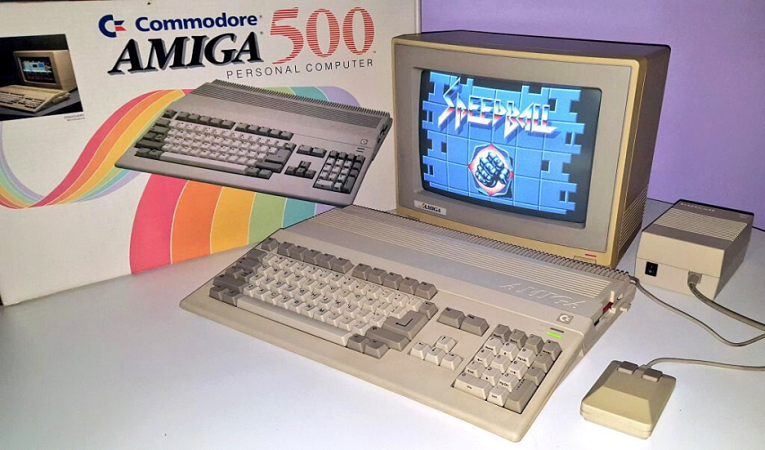 Retro Games Could be releasing Commodore Amiga 500 replica in 2021