
Commander Keen 4: Secret of the Oracle has turned up on hardware nobody expected to see it running on: the 3DO. This unofficial port takes the 1991 DOS platform game and brings it across with a clear goal. Keep it looking, sounding and playing as close to the PC original as possible. That means no redesigned graphics, no remixed soundtrack and no attempt to turn Commander Keen into something it never was. Instead, the 3DO version sticks closely to the original EGA graphics, keeps the familiar AdLib-style sound and adjusts only the parts that have to change, such as controls, saving and video output. It’s a straightforward approach, and that suits the game.
Commander Keen before Doom changed everything
Commander Keen 4 comes from a very different period in id Software’s history. Before Wolfenstein 3D and Doom pushed the company towards first-person shooters, id was making colourful side-scrolling games for DOS PCs.
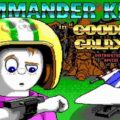
Released in 1991 as part of Commander Keen in Goodbye, Galaxy, Secret of the Oracle follows eight-year-old Billy Blaze, who becomes the helmet-wearing Commander Keen when he heads into space. This time he travels to the planet Gnosticus IV, moving between platform stages from an overhead world map.
The basics are easy to pick up. Keen runs, jumps and fires a neural stunner at enemies. Then there’s the pogo stick, which gives him extra height and changes the way many stages work. Levels are packed with hazards, moving platforms, switches, collectables and hidden areas.
For a DOS game of its time, it moved unusually well. Smooth scrolling was something PC platformers had often struggled with, especially compared with games built specifically for consoles. Commander Keen helped show that DOS machines could handle fast, responsive platform games too.
The 3DO port keeps the original look
The 3DO version doesn’t try to improve the artwork. That’s deliberate. The game runs at 320 x 240 and keeps the original pixel graphics intact. Instead of stretching the image to fill every part of the screen, the port uses small black borders where necessary. That prevents the artwork from being distorted and keeps the camera behaviour close to the DOS version.
It’s a sensible decision because Commander Keen 4 was designed around a very specific screen layout. Stretching or rescaling everything might fill more of the television, but it could also change how much of a level appears on screen and alter Keen’s position relative to platforms and enemies. So the pixels stay where they belong.
The audio follows the same idea. Rather than replacing the original sound with cleaner 3DO audio, the familiar OPL2 and AdLib-style effects have been recorded and built into the port. The soundtrack gets the same treatment. As a result, it sounds much like the DOS game even though the 3DO is handling things very differently behind the scenes.
The controller makes more sense than you might expect
Commander Keen 4 started life as a keyboard game, but its controls translate neatly to a 3DO pad. Movement, jumping, firing and using the pogo stick are mapped directly to the controller, so there’s no setup process to worry about. You switch on the game and play.
That might sound like a small change, but it makes the port feel much more like a conventional console release. On DOS, players could configure different input methods, but the 3DO version doesn’t need any of that. The hardware already provides exactly the sort of controller this type of platformer expects.
Saving has been adapted as well. The game can store progress using the 3DO’s internal memory, while parts of the original interface that depended on keyboard input are handled automatically. Lives, ammunition, scoring and the main gameplay systems remain present.
Most of the game is here
This isn’t just a demonstration running the opening stage. The levels work, enemies are present and important parts of the original game have been carried across. That includes areas such as Mirageia, the wetsuit sequence and the secret level.
There are some differences. A few enemy sounds are reused because of memory limitations, and certain timing details don’t match the DOS version exactly. Enemy behaviour can vary slightly in places, while projectiles and the pogo stick don’t always interact with objects in precisely the same way.
Performance is another area where the hardware shows through. The port aims to stay close to 60 frames per second, although original 3DO systems can slow down at times. None of that changes the basic structure of the game. It’s still recognisably Commander Keen 4 from the opening moments through to the later stages.
A DOS platformer running as a 3DO game
The finished port is distributed as a 3DO CD image and can run through compatible emulators or on original hardware using suitable media. What makes the project interesting isn’t a major technical overhaul. It’s almost the opposite.
Commander Keen 4 hasn’t been rebuilt with 3DO-style video sequences, new artwork or CD audio. The game hasn’t been redesigned around the console either. The work has gone into keeping the DOS version intact while making the practical changes needed for different hardware.
The result feels less like a remake and more like the 3DO version that could have existed if someone had decided to release Commander Keen 4 for the machine in the first place. And that’s really the point. It’s Commander Keen 4, running on a 3DO, with surprisingly little getting in the way.
MORE AMIGA & RETRO NEWS
 Duke Nukem 3D is now running on real Panasonic 3DO hardware
 M2Suite brings 3DO and Panasonic M2 game analysis to Windows
 Super Mario 64 runs on 3DO in impressive real-hardware port
 Commander Keen 1 gets a Sega Master System port after 35 years
 Empire Interactive abandons 3DO revival after legal rights dispute
 The AARD code story: Microsoft’s quiet attack on DR-DOS compatibility
 Compaq DOS 3.31: the forgotten DOS release that broke the 32 MB barrier
 Why Norton Commander became a legendary MS-DOS file manager
 Bobby Prince, legendary composer of DOOM, Wolfenstein 3D and Duke Nukem 3D, has died
 A LucasArts classic sails onto PS1 with The Secret of Monkey Island port
 Blackthorne retrospective: why Blizzard’s 1994 DOS platformer still matters
 The Secret of Monkey Island history: development, success, and lasting legacy
 3DO console history: how a revolutionary system lost the console war
 How Commander Keen changed the face of MS-DOS gaming forever
 Commander Keen Dreams: Great ’90s MS-DOS nostalgia