
RollerCoaster Tycoon Wonderworks takes the familiar theme park formula and gives it a more physical edge. You’re still building rides, managing staff, keeping guests happy and trying to make money. The big difference is what happens when things go wrong. And things can go very wrong. Developed by Springloaded and published by Atari, Wonderworks is heading to PC through Early Access. It keeps many of the systems people expect from RollerCoaster Tycoon, including custom coaster building, research, park expansion and guest management. At the same time, it adds a physics system that lets rides break apart, malfunction and create problems well beyond a simple maintenance warning. That makes this less about placing attractions and watching the cash roll in. You’ll have to think about how hard you push your rides, how well you maintain them and whether an experiment is actually worth the risk.
The management side is still front and centre
At its core, RollerCoaster Tycoon Wonderworks is still a management game. You build attractions, place shops, add facilities, hire workers and expand the park when you can afford more land. Guests have their own needs, so food, toilets, entertainment and sensible park layouts all matter.
The Early Access version is planned to launch with two parks: Hollow Creek and Forest Frontiers. Each has its own setting and progression goals. Hit milestones, unlock more options and gradually grow the park. There’s plenty to work with from the start. The initial version is expected to include more than 60 rides, roller coasters and shops, plus over 150 scenery and decoration items.
Research also plays a part. You can unlock new attraction designs while the park keeps running, which means you’ll constantly be deciding where the money goes. Do you invest in something new, fix what you already have or buy more land? That’s classic RollerCoaster Tycoon territory.
Building roller coasters looks more flexible
Custom coasters are a major part of Wonderworks, and Springloaded has built a new coaster construction system for them. The idea is to make track building easier to adjust while still giving you control over the final design. You can shape the ride, tweak sections and test the result before sending paying guests onto it. But the interesting part goes beyond coaster construction.
Individual rides can have their behaviour adjusted. Speed, acceleration and duration can all be changed, which means you’re not stuck with the default settings. Want a Ferris wheel running much faster than normal? You can try it. Want a Pirate Ship going through a full rotation? That’s possible too. Of course, pushing rides harder has consequences.
When rides break, they really break
This is where Wonderworks separates itself from the older games. Attractions can deteriorate over time. They can malfunction. Parts can come loose. A ride can break into pieces instead of simply stopping and waiting for a mechanic. That creates a much messier kind of problem.
Debris can move through the park, guests can get injured and major incidents can require a helicopter clean-up. The physics system means a breakdown isn’t always contained to one attraction. So ride testing matters.
You can push an attraction to make it faster or more intense, but there’s a trade-off. Higher performance can put more pressure on the machinery. If you keep going, you may end up with a ride that’s exciting for all the wrong reasons. That gives maintenance a bigger role. It’s not just another stat to watch. It can affect how the entire park operates.
Staff still have plenty to do
Running the park means managing people as well as machinery. Janitors, mechanics and mascots all have specific jobs, and you can assign staff to different working zones. That should become more useful as parks grow and walking distances increase.
Heat maps and statistics help you keep track of what’s happening. If one area is getting filthy, guests are unhappy or a ride is becoming unreliable, you’ll have data to work with. It’s a familiar system, but it fits well with the more detailed breakdown mechanics. If something keeps failing, you’ll want to know why.
Early Access will start with the main systems
The first Early Access build is expected to include the core park management tools. That covers coaster construction, ride placement, customisation, testing, maintenance, deterioration, guest behaviour, staff management, terraforming, statistics and heat maps.
Springloaded estimates that unlocking the initial content will take around six hours. That doesn’t mean the game stops there, though. The park-building systems are designed to keep going once you’ve completed the main progression goals. The Early Access period is currently expected to last around a year.
Plans for the full version include at least six more parks, additional rides, more objectives and extra building assets. Water attractions, weather effects and a larger progression system are also planned. Other additions include a classic-style coaster building option and park gridline controls. So the launch version looks like the foundation rather than the finished package.
Atari brings the series back under its own publishing banner
Atari is publishing RollerCoaster Tycoon Wonderworks, keeping the new game closely tied to the company that currently controls the RollerCoaster Tycoon brand.
For this project, Springloaded is handling development while Atari takes the publishing role. That gives Wonderworks a clear place within the modern RollerCoaster Tycoon line rather than presenting it as a separate spin-off with only a loose connection to the series name.
PC requirements aren’t especially demanding
RollerCoaster Tycoon Wonderworks is a single-player PC game with Steam Cloud and Family Sharing support. The minimum requirements list Windows 10 or newer, a 3.0 GHz processor, 8 GB of RAM, a GeForce GTX 950-class graphics card and 5 GB of storage. For the recommended setup, you’ll need Windows 11, 16 GB of RAM and a GeForce RTX 3060-class GPU. There’s no confirmed release date yet for the Early Access launch.
What we do know is what Wonderworks is aiming for. It takes the usual RollerCoaster Tycoon mix of park building, money management and guest satisfaction, then adds more detailed ride controls and a physics system that can turn bad maintenance decisions into very visible problems. It’s still about running a theme park. You’ll just have more reasons to keep an eye on the machinery.
MORE AMIGA & RETRO NEWS
 How Chris Sawyer programmed Transport Tycoon almost entirely in assembly
 How Atari used intellectual property to secure millions from Sega
 The iPad just got the RollerCoaster Tycoon 2 port fans wanted
 Theme Hospital just got the upgrade fans have been waiting for
 Atari Video Music: the 1977 Atari console that turned music into TV visuals
 How Commodore’s lawsuit slowed Jack Tramiel’s Atari computer plans
 Two Point Hospital: Full Health Collection announced for PS5, Xbox Series and Switch 2
 Jurassic Park at 33: the Commodore Amiga’s forgotten Hollywood role
 RollerCoaster Tycoon 2 lives on with the new OpenRCT2 update
 Theme Hospital retrospective: Bullfrog’s brilliant hospital sim still makes us laugh
 Atari and Commodore are back: the old rivalry enters a new generation
 Atari’s RollerCoaster Tycoon Classic is now available on PlayStation and Xbox
 The 50 best Amiga games of all time: a nostalgic journey through the Commodore era
 Transport Tycoon is back: Atari brings the 90s strategy classic to Steam and GOG
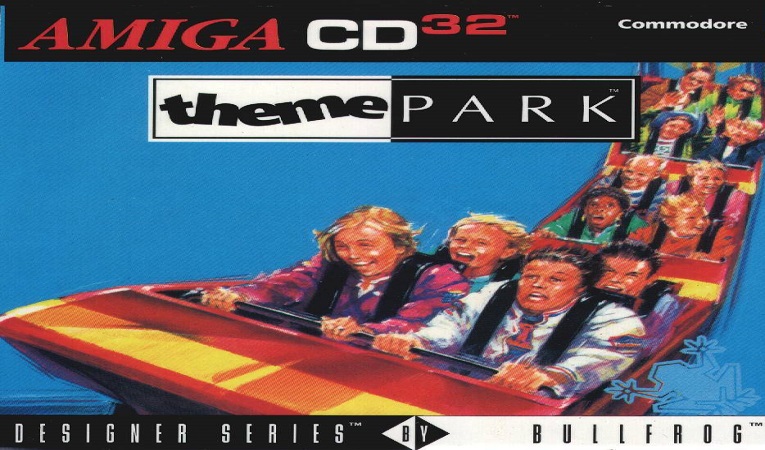 Why Theme Park is the peak of classic Amiga simulator games