
The Commodore Amiga CD32 arrived in Europe in September 1993 with a simple sales pitch. Take the Amiga 1200, turn it into a console, fit a double-speed CD-ROM drive and sell it for £299. No floppy swapping. No desktop. No keyboard required. Put a disc in, close the lid and play. It made sense. More sense, in fact, than Commodore’s later reputation can make it seem. CD-ROM was becoming a serious selling point, the Amiga already had a large games catalogue, and developers were familiar with Commodore’s hardware. The CD32 offered CD audio, far more storage than floppy disks and the colourful AGA graphics used by the Amiga 1200 and Amiga 4000. There was a catch. Under the black plastic sat technology closely related to a home computer already on sale. In 1993, none of this made the CD32 useless. It did mean Commodore had put a very new storage format around hardware with limited room to grow.
September 1993: Commodore turns the Amiga into a console
The CD32 wasn’t an entirely new machine. Commodore took much of the Amiga 1200 architecture and repackaged it for the living room. Inside sat the Advanced Graphics Architecture chipset, better known as AGA, paired with 2 MB of Chip RAM and Motorola’s 68EC020 processor. Paula handled sound. Akiko dealt with CD-ROM control and other system functions. A top-loading double-speed CD drive dominated the case.
A standard Amiga disk offered less than a megabyte of usable storage. A CD could hold hundreds of megabytes. Developers had room for recorded speech, longer music tracks, video sequences and much larger collections of art. On paper, the early-1990s multimedia pitch was covered.
Why the CD32 was good
Start with the price. At £299 in the UK, the CD32 gave buyers a complete CD-based games machine without requiring a separate computer or console underneath it. Sega’s Mega-CD needed a Mega Drive. Other CD systems could cost far more. The CD32 was simple too. Insert a game and it booted. Anyone used to configuring an Amiga, juggling disks or dealing with Workbench could see the attraction.
AGA graphics were another useful asset. The chipset offered a palette of 16.8 million colours and far more graphical flexibility than older OCS and ECS Amigas. For 2D games, adventures, platformers, strategy titles and many racing games, the system could produce strong results.
Developers already had experience with the hardware. Amiga 1200 games could be converted quickly, keeping costs under control and giving publishers an immediate catalogue. This was both the clever part and the problem.

Too many Amiga games on a bigger disc
CD-ROM gave developers an enormous increase in storage. Many CD32 releases barely used it. The quickest porting job was simple: take an existing Amiga title, adapt the controls, move the data onto CD and ship it. Some publishers added CD audio, speech or new presentation. Others made smaller changes.
This created a strange first impression. Commodore was selling a 32-bit CD console, but buyers could easily encounter games carrying obvious Amiga roots. Graphics, structure and controls could remain close to the floppy originals. A title occupying only a small fraction of a CD didn’t become a new-generation game through a storage change.
The CD32 pad had several face buttons and shoulder controls, yet ports derived from one-button Amiga joystick designs rarely used much of them. Plenty of those games were good. The problem was identity. Commodore needed software capable of showing why this new machine deserved its own place under the television. It needed time. Commodore had very little.
The 68EC020 was already becoming a problem
The CD32’s Motorola 68EC020 often gets reduced to one line: a 32-bit console with an underpowered processor. The real issue was less dramatic and more damaging. The 68EC020 belonged to Motorola’s 32-bit 68000 family and used a 32-bit data path. The EC model had a 24-bit address space and no memory management unit. For a games console, losing the MMU wasn’t the main concern. Raw CPU performance was.
At roughly 14.2 MHz, the chip sat close to the processor already used in the Amiga 1200. Commodore had created a new console, but developers didn’t receive a major jump in processing speed. For classic Amiga-style games, this could work well. Problems appeared once developers pushed texture mapping, polygon graphics and software-rendered 3D.
AGA came from a planar graphics tradition. Newer 3D engines often preferred chunky pixel data. Akiko included hardware assistance for converting chunky graphics into the planar format AGA expected. Useful? Yes. A 3D processor? No. Offcourse, it’s still 1993, but it was rather limited and the wow effect from early days was officially gone.
The 68EC020 still had to calculate game logic, geometry and much of the rendering work. Akiko could help with pixel conversion, but it couldn’t remove the heavy maths from the CPU.
This became more serious as Sega Saturn and Sony PlayStation approached. Both came from projects with 3D graphics much closer to the centre of their design. The CD32 carried the language of a new generation, yet much of its architecture came from the previous one. The 32-bit label was technically defensible. Buyer expectations were moving faster.

Commodore had a bigger problem than the CPU
A faster processor would have improved the CD32. It wouldn’t have repaired Commodore. By 1993, the company was losing money and struggling to maintain a large international hardware business. Cash was tight. Supplier relationships were under strain. Developing a completely new console architecture required investment Commodore was poorly placed to make.
Reusing Amiga 1200 technology kept development cheaper and got the CD32 into shops sooner. North America was an obvious target, and a US CD32 launch was planned for 1994 at around $399. For a company short of cash, America mattered. Losing access to the market removed a major source of possible sales. A patent case made exactly this happen.
The Cad Track lawsuit closed the US door
Commodore had been involved in a patent dispute with Cad Track over a US patent covering the use of exclusive-OR, or XOR, in computer graphics for reversible screen elements such as cursors. The dispute ended with Commodore facing a payment reported at roughly $10 million. Commodore failed to satisfy the judgement, and a US federal injunction prevented the company from importing products into the United States.
For the CD32, the timing could hardly have been worse. Commodore planned to sell the console in America, with machines produced outside the country. The injunction blocked the import route needed for a proper US launch. Some CD32 hardware reached North American buyers through Canada and independent channels, but this was no replacement for a nationwide retail release.
It’s tempting to turn the lawsuit into a neat story where one court case killed the CD32. Reality was messier. Commodore already had major financial problems before the injunction. The company didn’t collapse from a single legal bill.
The case mattered since it closed a market Commodore badly needed at the exact point when cash, production and sales were under pressure. Publishers had less reason to invest heavily in exclusive software. Commodore lost another route to revenue. There wasn’t enough time to recover.

Eight months from launch to liquidation
On 29 April 1994, Commodore International entered voluntary liquidation. This makes the CD32 difficult to judge like a normal failed console. It didn’t spend years competing in shops before consumers rejected it. Its manufacturer disappeared only months after the European launch.
The hardware had clear limitations. Its 68EC020 offered too little extra CPU performance over an Amiga 1200. AGA remained a capable 2D chipset in a market moving hard into 3D. Akiko helped with graphics conversion but couldn’t fill the gap left by dedicated 3D hardware.
At the same time, the basic product made commercial sense. CD-ROM gave developers huge storage. The price was competitive. Existing Amiga expertise made ports cheap. The console was easy to use. By 1994, Sony and Sega were preparing machines with far greater 3D performance. The CD32 needed stronger software, wider distribution and newer hardware to stay competitive. None arrived.
Why the Commodore Amiga CD32 failed
The CD32 failed through a collision of timing, hardware limits and company finances. Commodore launched a sensible £299 CD console in September 1993 using technology it already owned. This kept costs down and gave the machine an instant route to software. The same decision left it with a 14 MHz-class 68EC020 at a point when games were becoming much more CPU-hungry and 3D graphics were moving into the centre of console design.
Its CD-ROM drive solved the storage problem, but storage wasn’t the only problem facing game hardware. A large disc couldn’t make the CPU faster. Akiko couldn’t turn AGA into a polygon engine. Straight Amiga ports couldn’t establish a distinct console identity on their own.
The Cad Track injunction landed on top of those weaknesses and Commodore’s worsening finances. It blocked the planned US launch, cutting off an important market at a moment when the company needed sales and cash.
Seven months after the CD32’s September 1993 release, Commodore was effectively finished. On 29 April 1994, liquidation made it official. So the Amiga CD32 story isn’t about a terrible console. It’s about a reasonable console built from familiar parts, released into a market changing faster than its manufacturer could respond.
The 68EC020 set a technical ceiling. The software catalogue struggled to explain the CD format early enough. The lawsuit blocked the American launch. Commodore’s finances left almost no margin for any of those problems. The CD32 arrived in September 1993. By spring 1994, its company was gone.
MORE AMIGA & RETRO NEWS
 Commodore Amiga in the 1990s: AAA, AGA and the race against the PC
 41 years of Commodore Amiga: 41 facts about the legendary computer
 THEA1200 features revealed: Workbench 3.1, USB loading and RTG support
 How a forgotten Sony video chip powered the Amiga A600, A1200 and CD32
 Amiga beyond Commodore: how outside companies built its gaming, video and software legacy
 This modder’s Ultimate Amiga 1200 turns Commodore’s classic into a retro powerhouse
 Amiga CD32 gets better MiSTer FPGA support with updated Amiga core
 Ranko Rodic shows AGA progress on AmiCube FPGA Amiga system
 Commodore in 1993: the financial crisis behind the fall of the Amiga
 What If Commodore allowed Amiga clones? The alternate history of a lost computer empire
 Could Akiko have saved the Amiga CD32 from PlayStation and Sega Saturn?
 Micronik Infinitiv 1200: Amiga 1200 tower case history, specs, price and legacy
 AGA, Chip RAM and CPU contention: the real Amiga 1200 story
 The 50 best Amiga games of all time: a nostalgic journey through the Commodore era
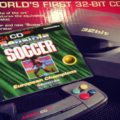 September 1993: European launch of the first full 32-bit gaming console in the world