
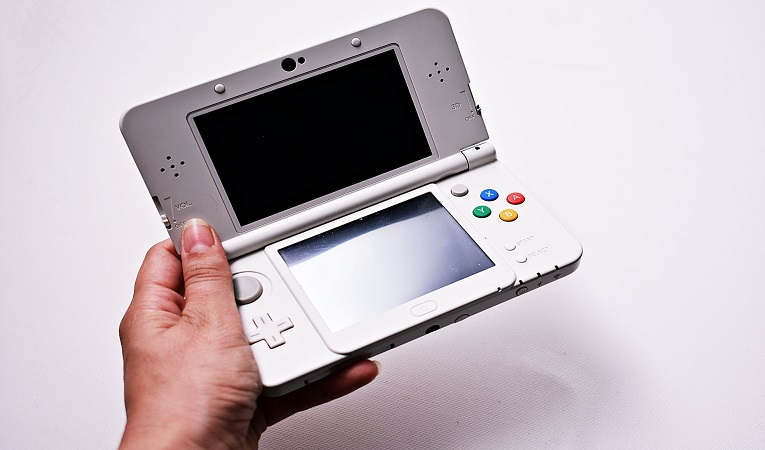
Version 3.0 of the native port reworks rendering on original 3DS hardware, makes smart use of both screens and adds display and control options beyond Nintendo’s old Console release. This is still A Link to the Past at its core. Link crosses Hyrule, clears dungeons, gathers familiar tools and moves between the Light World and Dark World. The difference sits around the game. Menus, rendering, screen layout and performance have been adapted for 3DS hardware rather than placed inside a straightforward SNES emulator.
The lower screen finally has a proper job
The upper 400 x 240 display carries the main action, leaving the 320 x 240 touchscreen free for maps, equipment, item selection and settings. It makes sense on 3DS. Instead of pausing whenever you want to check a dungeon map or swap gear, key information can live on the lower display.
Nothing turns A Link to the Past into a different game, but the interface suits Nintendo’s handheld format far better than a simple copy of the original SNES presentation. Players can pick the original proportions, a stretched picture or a native wide mode built for the 3DS screen. Zoom settings offer more control over how much of Hyrule appears at once.
Version 3.0 gives the original 3DS more room to breathe
Version 3.0 brings its biggest technical change to original Nintendo 3DS systems. Rendering can now use the handheld’s PICA200 graphics processor, reducing the amount of work pushed through the CPU. Some effects still use software rendering when needed, so the port mixes both methods rather than forcing every visual task through one route.
Game logic runs on fixed 60 Hz timing. This keeps game speed separate from changes in frame delivery. The port can split PPU scanline rendering across available CPU cores too, using different configurations on original 3DS and New Nintendo 3DS hardware. Owners of early 3DS models get the biggest gain here. Version 3.0 spends real effort on machines with less processing headroom, instead of treating New 3DS as the default target.
Wide mode and turbo controls add useful options
The port includes a configurable Turbo mode with 2x, 3x, 4x and 5x speed settings. New Nintendo 3DS owners can use extra controls such as the C-Stick to keep Turbo active.
It’s a niche feature, but useful for repeated sections, testing or anyone who prefers a faster pace outside combat and puzzle solving. Display settings, zoom, Turbo choices and control preferences can be stored for the active ROM setup.
You still need your own game data
The port doesn’t ship with Nintendo’s game files. It extracts required assets locally from a compatible US ROM supplied by the user.
Certain translated ROM versions can work beside a clean US copy. The original ROM provides required assets and the modified ROM supplies translated text. Heavily modified versions aren’t the main target, so compatibility centres on translation projects rather than altered campaigns or major gameplay hacks. Audio needs DSP firmware taken from the user’s own Nintendo 3DS.
Why A Link to the Past still matters
Nintendo released The Legend of Zelda: A Link to the Past for Super Famicom in Japan in November 1991, followed by the European SNES release in September 1992. It was the third main Zelda game and helped establish many ideas later entries kept using.
The Master Sword took a central role. Items such as the Hookshot and Pegasus Boots became series staples. Its paired Light World and Dark World gave players two connected versions of Hyrule, with routes, puzzles and dungeon access changing between them. Nintendo has reissued the game many times since. Wii and Wii U received Virtual Console versions, and New Nintendo 3DS got an official Virtual Console release in Europe in 2016.
This native port takes a different route. It doesn’t try to disguise the 3DS as a Super Nintendo. It uses the handheld’s screens, controls and graphics hardware directly, giving A Link to the Past a version built around the machine in your hands. Version 3.0 makes the strongest case yet for playing it this way, especially on an original 3DS.
MORE AMIGA & RETRO NEWS
 Akira Nishitani wants to rework Super Street Fighter 2 Turbo after 30 years
 Sonic Colours 3DS brings Sega’s colourful 2010 platformer to Nintendo 3DS
 The Legend of Zelda: The Minish Cap gets a native Nintendo 3DS port
 Classic PC game Postal arrives on New Nintendo 3DS
 New Azahar update delivers major upgrades for Nintendo 3DS emulation on Android
 Checkpoint 4 modernises save management across Nintendo 3DS and Switch
 How Q-Link brought email, chat and games to the Commodore 64
 MagicX 2DS-style handheld could make DS emulation feel natural again
 A new USB-C adapter could bring classic Game Boy multiplayer into the online era
 Neo Turbo Challenge brings Lotus-style arcade racing back to Amiga AGA
 RG VITA Pro Linux update adds new themes, core switching and better 3DS support
 Super Street Fighter II Turbo on Commodore 64: new C64 update shows serious progress
 Zelda: Ocarina of Time Remake for Switch 2 sparks fan worries over big changes
 How Amiga Kickstart ROM works: hardware mapping and shadow ROM techniques
 uae3DS Released: play Commodore Amiga 500 games on Nintendo 3DS