
The usual explanation for Commodore’s failure is that the company did not invest enough in the Amiga. That is broadly true, but it oversimplifies a much more difficult business problem. Commodore did not enter the Amiga era as a company with unlimited money waiting to be redirected towards a promising new platform. It entered that era while its existing home computer business was contracting rapidly, its finances were under pressure and the personal computer market was becoming more competitive every year. An Amiga-only Commodore would therefore have required considerably more than cancelling the Commodore 64, abandoning IBM-compatible PCs and putting an Amiga badge on everything else. The company would have had to reorganise its finances, semiconductor operation, factories, operating-system development, engineering teams and product planning around a single architecture from 1984 onwards. Brilliant strategy or huge mistake?
The financial problem starts before the Amiga has a chance
Commodore acquired Amiga in 1984, gaining the technology that would become the Amiga 1000 and the custom-chip architecture behind the machine. The timing was difficult. In fiscal 1984 Commodore generated approximately $1.27 billion in revenue and recorded about $144 million in profit. A year later revenue had fallen to roughly $883 million and the company posted a loss of approximately $114 million. Fiscal 1986 brought another substantial loss.
That deterioration matters because it changes the economics of an Amiga-only strategy. The Commodore 64 was an ageing platform by the middle of the 1980s, but it still represented an enormous installed base, a well-established production system and significant sales volume. Commodore’s PC-compatible business would later become another substantial contributor to turnover, particularly in Europe.
Cancelling those businesses immediately would have removed revenue before the Amiga had enough volume to replace it. The Amiga 1000 was never capable of doing that job by itself. Introduced in 1985, it was technologically sophisticated but too expensive to become an immediate successor to the Commodore 64. Its Motorola 68000 processor, dedicated graphics and audio hardware and multitasking operating system gave Commodore an advanced platform, but its original price placed it in a completely different market from the inexpensive eight-bit machines on which Commodore had built much of its business.
The first requirement for an Amiga-only Commodore would therefore have been financial discipline rather than technical ambition. Commodore would have needed to accept lower revenue during the transition while ensuring that a cheaper Amiga reached production as quickly as possible.

The Amiga 500 would have become the most important project in the company
The machine that eventually solved much of Commodore’s pricing problem was the Amiga 500. Released in 1987, the A500 placed most of the capabilities of the Amiga architecture into a far cheaper all-in-one system. It became the mass-market Amiga and ultimately sold in numbers the original A1000 could never approach. In an Amiga-only strategy, development of an A500-class machine would have started immediately after Commodore acquired Amiga.
That does not mean Commodore could realistically have launched an A500 in 1985. The original Amiga hardware was still being completed, the operating system was unfinished, production engineering had to be established and the custom-chip manufacturing process had to become reliable.
A launch during 1986, however, becomes more plausible if the company treats cost reduction as one of its highest priorities from the beginning. This would have been the decisive element of the strategy. A high-end Amiga alone could not replace the Commodore 64. A cheaper Amiga might.
Instead of introducing the Amiga 1000 and then gradually deciding what a low-cost Amiga should look like, Commodore could have developed two systems in parallel: an expandable professional model and a mass-market machine built around as much common hardware as possible. That approach eventually appeared in the A500 and A2000 generation anyway. An Amiga-only Commodore would simply have made it company policy several years earlier.
Commodore would need one platform, not one computer
The biggest strategic change would have been conceptual. Commodore historically tended to think in terms of individual machines. An Amiga-focused Commodore would have needed to think in terms of a platform. The distinction is substantial.
A platform requires processor roadmaps, chipset generations, operating-system compatibility, developer tools, documentation, expansion standards, software APIs and upgrade paths that remain coherent across several generations of hardware. The Amiga already had many of the technical ingredients.
Its original architecture paired the Motorola 68000 with the Agnus, Denise and Paula custom chips. Those components handled graphics, memory access, audio, disk operations and other functions that conventional computers often left to the main CPU.
That made the Amiga unusually capable for its price. It also created a future engineering problem. Software developers frequently accessed the custom hardware directly because doing so could produce impressive performance. That approach worked extremely well while Amiga hardware remained broadly similar. It became less attractive once Commodore needed to make major changes to the architecture.
A company planning to sell Amigas for decades would therefore have had to strengthen the software abstraction between applications and hardware much earlier. That would make operating-system development just as important as custom-chip development.

AmigaOS needed to become a major R&D programme
The original Amiga operating system was advanced in several important areas. Exec provided pre-emptive multitasking and efficient message passing in an exceptionally small kernel. Intuition delivered the graphical user interface, while the system’s graphics libraries provided access to the Amiga’s unusual display hardware. The difficulty was that much of the system had been completed under intense time pressure.
The original software architecture was effective, but there were important areas that needed sustained development: hard-disk support, file systems, installation standards, networking, printer handling, system recovery, developer tools, memory management and a cleaner user interface.
Historically Commodore improved these areas over time. AmigaOS 1.3 strengthened hard-disk operation and introduced the Fast File System, while AmigaOS 2.0 brought a considerably more consistent interface and a broader set of system improvements.
An Amiga-only Commodore would have accelerated that schedule. An OS 2.0-class environment should ideally have appeared around 1988 or 1989 rather than becoming closely associated with the Amiga 3000 generation in 1990. Networking would also have needed much greater priority.
By the beginning of the 1990s networking was moving from specialist installations towards an increasingly normal part of professional computing. Commodore could not continue treating it largely as an optional third-party area if it wanted Amiga workstations to compete seriously in business, technical and educational markets. The same applies to developer tools.
Commodore needed strong C and assembly development environments, comprehensive documentation, stable APIs, compatibility-testing tools and clear rules for software that needed to survive several generations of Amiga hardware. Without that investment, faster chips alone would not solve the platform’s problems.
R&D spending would have needed to increase sharply
The difference between Commodore and its major competitors becomes particularly clear in research and development. Around the end of the 1980s Commodore was spending only a few tens of millions of dollars per year on R&D. Approximately $28 million was spent in fiscal 1990, while earlier annual spending was lower. Apple, operating at a much larger scale, was spending hundreds of millions.
The absolute comparison is not completely fair because Apple generated far more revenue, but the percentage of revenue devoted to future products is still important. Commodore was effectively attempting to maintain a proprietary operating system, custom semiconductor architecture, computer hardware family and developer ecosystem with an R&D budget that was modest relative to the scale of the task.
An Amiga-only Commodore would have needed to devote something closer to six or seven per cent of annual revenue to R&D during profitable years. At a company with revenue around $900 million to $1 billion, that would imply roughly $55 million to $70 million annually.
That would still have been far below Apple’s expenditure. The difference is that virtually all of it would be concentrated on one platform. There would be no separate engineering programme for Commodore PC compatibles, no meaningful new eight-bit computer development and fewer unrelated product projects. The result would not automatically be better management, but it would give Commodore’s technical teams significantly more resources with which to build successive Amiga generations.
MOS Technology would remain useful, but owning a fab would not solve everything
Commodore had another unusual advantage: its semiconductor operation. The company had acquired MOS Technology years earlier and used the business, later known as Commodore Semiconductor Group, to produce proprietary chips for many of its computers. Vertical integration had helped Commodore enormously during the eight-bit era. It could design custom logic internally, manufacture key components and reduce dependence on outside suppliers.
The Amiga benefited from this capability, but the economics of semiconductor manufacturing were already changing. Modern fabrication plants were becoming increasingly expensive. Commodore still depended on outside companies for processors and memory, and maintaining a competitive semiconductor process required ever larger investment.
An Amiga-only company would therefore have faced a choice. It could attempt to keep Commodore Semiconductor Group at the leading edge, requiring very large capital expenditure, or it could gradually shift towards a mixed model in which Commodore designed Amiga chips internally but increasingly used external foundries for advanced production.
The second approach would have been more realistic. Commodore’s strategic advantage came from knowing how to design highly integrated multimedia hardware, not from having to manufacture every transistor itself. Its own semiconductor facilities could still support prototyping, mature products and cost-sensitive parts while newer chipsets moved to external processes when necessary. That would free capital for architecture, operating-system work and product development.
Manufacturing would have become simpler
A single-platform company also changes how Commodore uses its factories. Historically Commodore manufactured and assembled numerous computer families for different markets. An Amiga-only business could reduce the number of board designs, cases, peripheral standards and production lines it had to support.
The ideal product family would use common components wherever possible. A low-cost Amiga and a professional Amiga could share versions of the same custom chipset, floppy controller architecture, keyboard electronics and operating-system ROMs. Professional models could add faster processors, larger amounts of Fast RAM, SCSI, networking and expansion slots rather than requiring an entirely separate architecture.
The A500 and A2000 already demonstrated part of this approach. They could address different markets while remaining recognisably part of the same platform. Applied consistently, that strategy could have reduced inventory risk and increased production volume for common components. For Commodore, which repeatedly struggled with margins and inventory later in its life, that would have had direct financial value.

Thomas Rattigan becomes central to the alternate Commodore
The management question is at least as important as the engineering question. Thomas Rattigan became Commodore’s chief executive during one of the company’s most serious financial crises. His restructuring programme cut costs, reduced excess operations and helped return Commodore to profitability. During the same period the A500 and A2000 strategy emerged.
In an Amiga-only scenario, retaining that management continuity would have been important. Rattigan would not need to become a technical visionary. The engineers already possessed the technical expertise. His role would be to keep the balance sheet under control while protecting a clearly defined Amiga development programme.
Irving Gould could remain chairman and major shareholder without continuously changing the operational direction of the company. That combination would give Commodore something it frequently lacked: a product roadmap that survived management changes. The objective from 1987 onwards would be straightforward. Every major investment would need to improve the Amiga platform, reduce its manufacturing cost, expand its software market or advance its hardware.
Keeping the Amiga engineering teams together would matter
Commodore also acquired an unusually strong technical team with Amiga. Jay Miner had been central to the architecture of the original custom chipset. Carl Sassenrath developed Exec. RJ Mical created Intuition. Dale Luck worked extensively on graphics. Other engineers helped transform the original Lorraine prototypes into production hardware. Later Commodore engineers including Jeff Porter, George Robbins and Bob Welland became important in the development of practical and lower-cost Amiga systems.
Dave Haynie became particularly significant on the high-end machines, including work related to the A2000, A3000, Zorro III and later chipset development. The problem was not a lack of capable engineers. The problem was keeping enough of them working on a consistent roadmap long enough for their work to reach production.
An Amiga-only Commodore would therefore have had to treat engineering retention as part of its capital investment. Development centres could have remained geographically specialised rather than being repeatedly reorganised. Advanced chipset and operating-system work could remain concentrated with the people most familiar with the architecture, while production engineering and system integration were handled elsewhere in the company. That would not remove internal disagreements. It would simply make technical continuity more valuable than organisational tidiness.
Ranger becomes more important
One of the most significant lost opportunities in Amiga development was the Ranger project. Ranger represented an attempt to move the architecture beyond the limitations of the original chipset, particularly in graphics memory and bandwidth. The exact specifications changed during development, and some later descriptions exaggerate what production hardware would necessarily have delivered, but the basic problem Ranger attempted to solve was real.
The original Amiga chipset could not remain competitive indefinitely. An Amiga-only Commodore would probably have divided chipset development into two tracks. The mass-market machines would continue using aggressively cost-reduced versions of proven technology. Professional systems would adopt more expensive improvements earlier.
That approach would avoid forcing every low-cost Amiga to carry the cost of workstation-class hardware while still giving Commodore a way to move the architecture forward. It would also create a development path in which successful high-end features could later migrate into cheaper systems. That model was already common elsewhere in the computer industry. Commodore had the engineering ability to use it.

The Amiga 3000 concept should have arrived sooner
The Amiga 3000 is a useful indication of what the professional Amiga could become. Introduced in 1990, it used Motorola 68030 processors, offered a cleaner 32-bit architecture, SCSI storage, Zorro III expansion and AmigaOS 2.0. It was substantially closer to a serious workstation than the inexpensive home systems with which the Amiga name was increasingly associated.
An Amiga-focused company could have made that philosophy central to the professional line. With more concentrated development, an A3000-class system appearing during 1989 is not unreasonable. The important point would not be the exact launch date.
It would be the continuity between that machine and the lower-cost Amigas. Instead of professional and consumer Amigas slowly diverging into separate development problems, both lines would remain part of a common hardware and software roadmap. Commodore could also continue offering Unix configurations where those created additional sales without fragmenting the underlying hardware. A workstation sold with Unix would still increase production volume for Amiga motherboards, expansion hardware and processors. A Commodore PC clone would not.
Dropping IBM-compatible PCs would hurt before it helped
Removing Commodore’s PC-compatible business is one of the more difficult parts of the scenario. Those machines generated real revenue, especially in Europe. At points near the end of the 1980s, PC-compatible systems represented a substantial part of Commodore’s business. Cancelling them would therefore make the company smaller.
The strategic argument is that PC revenue did little to strengthen Commodore’s proprietary technology. Every Commodore PC sold increased the installed base for MS-DOS and later Windows software. Commodore controlled neither the processor architecture nor the operating system and competed largely on manufacturing, distribution and price.
Margins in that market became increasingly difficult as specialist PC manufacturers and Asian suppliers expanded. The Amiga was different. Every Amiga sold increased the potential market for Amiga applications and games, raised demand for Commodore-designed chips and improved the economics of future Amiga development.
By the early 1990s the historical sales mix was moving in that direction anyway. Amiga systems generated roughly 56 per cent of Commodore’s net sales in fiscal 1991 and approximately 63 per cent in fiscal 1992. Commodore was gradually turning into an Amiga company. An all-Amiga strategy would have forced that transition much earlier.
The PC becomes the real competitor around 1990
The Atari ST would remain an important competitor during the second half of the 1980s, particularly in Europe. It would not remain Commodore’s most important strategic problem. By 1990 the decisive competitor was the IBM-compatible PC.
Windows 3.0 improved the usability of the graphical PC environment. Intel’s 80386 and 80486 families continued increasing processor performance. VGA had established a stronger graphics baseline, while independent companies were developing more capable graphics cards, sound cards, storage controllers and networking hardware.
The PC did not need one manufacturer to finance its development. Its progress came from an entire industry. This gave it an economic advantage that Commodore could not reproduce internally. An Amiga-only strategy therefore could not depend on maintaining a permanent hardware lead.
It would need to combine competitive custom hardware with software compatibility, lower prices and clear specialisation. Multimedia, games, graphics, video and inexpensive general computing were logical areas. Attempting to match every PC configuration in every business market was not.

AGA needed to happen earlier and do more
The Amiga’s largest technical problem by the beginning of the 1990s was the ageing custom-chip architecture. The original design had been exceptional in 1985. By 1990, maintaining essentially the same basic graphics organisation had become a liability. Commodore eventually introduced AGA in 1992 with machines including the Amiga 1200 and Amiga 4000.
AGA improved colour capabilities and memory bandwidth, but it remained strongly related to the original planar graphics architecture. That was increasingly awkward as games and graphical software moved towards rendering techniques that were better suited to chunky pixel formats. An Amiga-only Commodore would need an intermediate architecture ready around 1990 or 1991.
It would not need to be the enormously ambitious AAA project. A more realistic design would combine significantly higher chip-memory bandwidth, 32-bit access, improved colour depth, high-resolution non-interlaced displays, larger amounts of chip RAM and a chunky graphics mode while retaining backwards compatibility where practical. That machine would then give software developers a new baseline several years earlier. The objective would be regular improvement rather than waiting for a single revolutionary chipset.
Audio could not remain frozen either
Paula was one of the Amiga’s major advantages in 1985. Four channels of sampled digital audio gave inexpensive Amigas capabilities that many contemporary computers lacked. By the early 1990s that advantage was disappearing. PC sound hardware had improved rapidly and increasingly supported 16-bit digital audio, while CD-ROM was changing consumer expectations.
A concentrated Amiga chipset programme would therefore need to replace or extend Paula around the same time that graphics received a major upgrade. Higher-quality digital audio, more flexible DMA and better mixing support would become standard. Professional machines could add DSP capabilities where the economics justified them. The key point is that graphics and audio development would be treated as ongoing platform engineering rather than occasional major upgrades.
The A600 would probably never exist in its historical form
An Amiga-only Commodore would also have less room for products that did not clearly move the platform forward. The Amiga 600 is an obvious example. It introduced useful features such as IDE and PCMCIA in a compact design, but it arrived at a point when Commodore urgently needed to move customers and developers towards newer graphics and faster processors.
The result was another 68000-based OCS/ECS-class machine arriving just before the A1200. A tighter product strategy would instead use those engineering resources to reduce the cost of the next-generation mainstream Amiga.
The company would ideally maintain three broad positions. A low-cost Amiga for home use and games. A mainstream machine with the current chipset and expandable storage. A professional Amiga with faster processors, more memory, networking and internal expansion. The individual model names would matter far less than maintaining a clear generational structure.
CDTV and CD32 become platform variants
Commodore’s experiments with CD-based consumer hardware would still make sense in an Amiga-only company. The implementation would need to be different. CDTV should not be treated as a substantially separate consumer-electronics concept. It should be marketed and supported as a CD-equipped Amiga configuration with a common software environment.
The same applies to the later CD32. A console can be strategically useful if its hardware increases production volume for the same chipset used in computers and if developers can move software easily between systems. That produces economies of scale. It also keeps engineering focused. Commodore would not need separate visions for a computer platform, multimedia appliance and games console. Those products would simply be different implementations of Amiga technology.

Europe becomes the commercial centre of the Amiga business
Commodore’s geographical sales pattern also suggests where an Amiga-only strategy would concentrate resources. By the early 1990s the company was overwhelmingly dependent on Europe. The Amiga had particularly strong positions in countries such as Germany and the United Kingdom, while Commodore’s North American position had weakened considerably.
An Amiga-only company should have recognised that reality rather than repeatedly treating the United States as if it remained the company’s natural centre of gravity. Europe would become the high-volume consumer market. North America could be addressed more selectively through video production, graphics, education, multimedia and specialist workstation applications.
This would not necessarily produce the largest possible company. It could produce a more efficient one. The PC was already extremely difficult to challenge in mainstream American business computing. Spending heavily to change that would have been unlikely to produce an adequate return.
Video and multimedia become commercial markets, not identity
The Amiga’s professional video applications provide another useful example of how Commodore could position the platform without attempting to compete everywhere. Expandable Amigas found substantial use in video production because their architecture worked well with television-oriented graphics and external video hardware. That market had commercial value. An Amiga-only Commodore could support it directly with suitable expansion standards, genlock capabilities, storage, graphics options and software relationships.
The same approach could apply to multimedia production, educational installations and lower-cost graphics workstations. These markets would not need to define the Amiga as a specialist machine. They would simply be areas where its architecture provided a measurable advantage. The mass-market machines would continue carrying most of the production volume.
The numbers suggest why R&D cuts were a false economy
Commodore’s historical finances during the early 1990s show why reducing engineering expenditure could not solve the company’s deeper problems. Revenue reached approximately $1.05 billion in fiscal 1991 before falling to around $911 million in 1992 and approximately $591 million in 1993. Fiscal 1993 produced a loss of roughly $357 million.
Large portions of that loss were associated with restructuring, asset write-downs, inventory problems and pricing actions. Those numbers put Commodore’s R&D budget into perspective. Saving tens of millions of dollars on engineering provided little protection if ageing products later required enormous inventory write-offs and aggressive discounting.
A stronger product roadmap would not guarantee profitability. It could reduce the probability that Commodore found itself holding large quantities of hardware that the market no longer wanted at the expected price. That is particularly important in consumer computing, where a six-month delay can materially change the value of inventory.
A financially disciplined Amiga company would probably be smaller
A successful all-Amiga Commodore should not be imagined as a company that automatically keeps historical revenue while adding better Amigas. Its turnover would probably fall significantly during the second half of the 1980s. The C64 and PC divisions generated revenue that would disappear.
Some customers would simply move to other manufacturers. That means the company would need to be managed for lower revenue but stronger strategic concentration. Headcount, factory capacity and distribution would need to reflect that smaller scale. The reward would be that nearly every sale contributes to the same hardware and software ecosystem.
If the Amiga grows successfully, the platform gradually absorbs the volume that had previously been spread across unrelated products. If it does not, Commodore fails earlier. That is the central financial risk of the entire scenario.
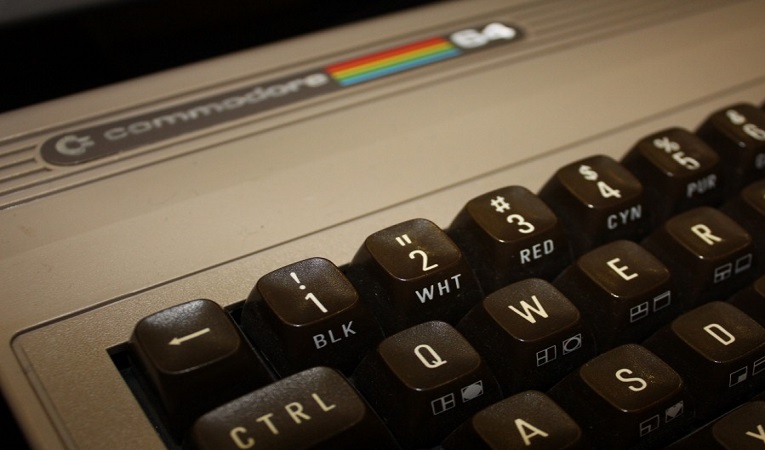
The C64 is the hardest product to abandon
The Commodore 64 creates the greatest problem for the pure Amiga strategy. It remained commercially relevant long after the Amiga appeared and continued selling in large numbers during the late 1980s. From a strictly financial perspective, the logical policy would have been to stop major new C64 development while continuing to manufacture the machine as long as it produced attractive margins.
That cash could then finance Amiga development. A literal Amiga-only policy removes that option. If production of the C64 ends rapidly after the Amiga launch, Commodore must replace those sales much sooner. That makes the early low-cost Amiga programme essential.
The company could potentially manage a short transition period in which existing C64 inventory continued to be sold while no new eight-bit engineering was funded, but the strategic endpoint would still be clear. The Amiga has to reach C64-class price territory far faster than it did historically. Without that, the numbers do not work.
Apple would remain a much larger competitor
A better-managed Commodore would not suddenly become larger than Apple. Apple already operated at a different financial scale by the end of the 1980s. Its annual revenue exceeded $5 billion while its R&D expenditure alone ran into hundreds of millions of dollars. Commodore could not match that directly. Its alternative would be efficiency.
A $60 million Amiga R&D budget focused on one hardware family, one operating system and one chipset roadmap could still produce substantial results. The company would also retain one important structural advantage. Custom multimedia hardware could deliver capabilities at consumer price levels without requiring expensive general-purpose processors to perform every task. The challenge would be maintaining that advantage as semiconductor technology advanced. That requires regular chipset releases. A brilliant 1985 architecture was not enough to remain a brilliant 1992 architecture.
The PC ecosystem would still be the biggest long-term challenge
Even under ideal management, the IBM-compatible market presents a problem that Commodore cannot completely solve. Intel and later competing CPU manufacturers could invest enormous sums in processor development. Microsoft could concentrate on operating systems. Graphics specialists could develop accelerators. Sound-card manufacturers could improve audio. Storage companies could improve disk interfaces. Hundreds of system builders could compete on price. No single PC company had to pay for the complete platform. Commodore did.
That means an Amiga-only strategy does not realistically result in the Amiga replacing the PC as the dominant global desktop architecture. A more plausible result is a stable third platform.
Commodore could remain important in European consumer computing, games, multimedia, graphics and selected professional markets while maintaining enough volume to fund continuing hardware and software development. That would already represent a substantially different outcome from the historical collapse of 1994.
What the 1994 Amiga range could have looked like
By 1994 an Amiga-only Commodore could plausibly have a considerably cleaner product range than the company actually offered during its final years. The entry-level machine would be a low-cost 32-bit Amiga with IDE storage, expandable RAM, a modernised multimedia chipset and straightforward CD-ROM support. The mainstream desktop would use the same software environment and graphics architecture but offer more expansion, faster CPUs and networking.
The professional model would build on the philosophy of the A3000 with 68040-class processing, SCSI, Ethernet, substantial Fast RAM and professional graphics and video expansion. A CD-based console could reuse much of the consumer hardware. There would be no need to maintain parallel MS-DOS PCs.
There would be no eight-bit product engineering programme. There would be fewer unrelated motherboard families and fewer inventory categories. More importantly, software developers would know what the next Amiga looked like. That predictability is one of the most important characteristics of a successful platform.
AAA still needs a reality check
Even with twice the R&D budget, not every ambitious Commodore project automatically becomes practical. AAA is a good example. The planned Advanced Amiga Architecture was considerably more ambitious than AGA and attempted to address many of the weaknesses of the original chipset.
Developing complex custom silicon remained expensive and difficult. An Amiga-only Commodore might still encounter delays. The difference would be that it would not need to wait for AAA before releasing meaningful improvements.
A disciplined chipset roadmap would favour incremental generations alongside longer-term projects. A practical 1990 or 1991 upgrade could be followed by a more advanced architecture several years later. That reduces the risk that one late project leaves the entire product family dependent on old hardware.

The 68000 family eventually becomes another strategic decision
Motorola’s 68000 family gave the Amiga a strong foundation through the second half of the 1980s. By the middle of the 1990s Commodore would nevertheless need to decide what came next. The 68040 could support high-end systems for a time, and the 68060 would later offer substantial performance, but the broader industry was moving towards new processor architectures and increasingly aggressive superscalar designs.
A surviving Commodore would eventually have to examine RISC options. The crucial preparation for such a move would happen years earlier in AmigaOS. If applications depend closely on particular processor behaviour and directly manipulate custom hardware, changing CPU architecture becomes exceptionally difficult. If Commodore strengthens APIs, operating-system services and hardware abstraction throughout the late 1980s and early 1990s, the transition becomes considerably more manageable. That is another reason software engineering is central to the scenario.
Commodore’s most valuable asset would become compatibility
By the early 1990s the biggest asset of an Amiga-only Commodore would no longer be any individual custom chip. It would be the accumulated compatibility of the platform. Millions of users, thousands of applications, established development tools and predictable APIs make switching costs higher for customers and increase the incentive for software companies to continue supporting the machine.
That only works if Commodore manages compatibility deliberately. Every new graphics architecture must provide either hardware compatibility or an effective software migration path. Every operating-system update must minimise unnecessary breakage.
Every processor generation must preserve existing applications wherever practical. The PC ecosystem achieved much of its strength by making older software continue working long after the original hardware had disappeared. Commodore needed the same discipline.

The most plausible outcome is survival, not domination
A completely focused Commodore still faces major structural disadvantages. Its revenue base is smaller than Apple’s. Its R&D resources are much smaller than the combined investment behind the PC. Its custom hardware requires continuing semiconductor expenditure. Its North American market position remains weak. Its European consumer business is vulnerable to aggressive PC pricing.
Those factors do not disappear because management makes better decisions. What changes is the rate at which Commodore’s technology loses competitiveness. A company investing $55 million to $70 million annually in one platform, releasing meaningful chipset improvements every two or three years, strengthening AmigaOS and maintaining a clear low-end and high-end product structure would enter the 1990s in a much stronger position than a company trying to support Amigas, PCs, ageing eight-bit products and multiple overlapping hardware programmes.
The historical Commodore was already becoming dependent on the Amiga. By fiscal 1991 the platform represented more than half of company sales. A year later it accounted for close to two-thirds. The transformation happened economically. It simply happened without an equally complete transformation in engineering and corporate structure.
An Amiga-only Commodore would have been a very different company
The central change in this alternate history is therefore not a faster Amiga or a cancelled PC division. It is organisational concentration. Commodore would have to decide in 1984 that the Amiga was not one product among several but the technological basis of the company. That decision would determine capital expenditure, semiconductor strategy, factories, software development, developer relations and management.
The first years would probably be financially difficult. Revenue from C64 systems and PC compatibles would disappear faster than Amiga sales could initially replace it. Commodore might need additional financing and would have less tolerance for mistakes. If it survived that transition, however, the economics become more favourable. A cheap Amiga arrives sooner.
A professional Amiga develops independently without abandoning compatibility. Operating-system development accelerates. Chipset revisions appear more regularly. Manufacturing uses more common components. Commodore Semiconductor Group concentrates on Amiga technology while external foundries handle processes that no longer make economic sense internally. Engineering talent is retained around a stable roadmap.
By 1990 the company enters the Windows 3.0 era with newer graphics hardware and a more mature operating system rather than relying heavily on technology introduced five years earlier. By 1992 it is shipping another generation rather than finally delivering the first major graphics upgrade to the mass market.
By 1994 Commodore is still under intense competitive pressure from PCs and Apple, but its difficulties are those of an active computer platform rather than those of a company attempting to finance delayed technology from falling product margins. That does not require the Amiga to dominate personal computing. It requires Commodore to give one architecture enough financial, engineering and organisational continuity to remain commercially competitive. The company already owned the platform. An all-Amiga strategy would have tested whether Commodore could also have built the company required to sustain it.
MORE AMIGA & RETRO NEWS
 Commodore Amiga in the 1990s: AAA, AGA and the race against the PC
 41 years of Commodore Amiga: 41 facts about the legendary computer
 How Sony almost bought the Amiga and changed computer history forever
 Amiga Ranger: the cancelled super Amiga Commodore never shipped
 The June 1984 CES demo that turned Amiga from prototype into Commodore’s future
 The companies that supported the Amiga long after Commodore’s bankruptcy
 Amiga beyond Commodore: how outside companies built its gaming, video and software legacy
 Mike Battilana’s quiet game: how Cloanto became the underdog power in retro computing
 Harald Speyer: the forgotten executive behind Commodore Europe
 Why ASIC technology could start the next Amiga hardware revolution
 Commodore in 1993: the financial crisis behind the fall of the Amiga
 Retro reverse engineering for beginners: ROMs, hex editors, assembly, and emulators
 What If Commodore allowed Amiga clones? The alternate history of a lost computer empire
 What if Dell won the Commodore auction? The Amiga’s lost future
 The 50 best Amiga games of all time: a nostalgic journey through the Commodore era