
Commander Keen 4 has arrived on Amiga, more than three decades after its original DOS release. It’s an unusual crossover, too. One of id Software’s early PC platform games can now run directly on suitably upgraded Amiga hardware, complete with its pogo stick, raygun, strange creatures and sprawling collection of colourful stages. There’s no redesign here. No new campaign either. The Amiga release sticks closely to Secret of the Oracle, using original game data from the 1991 version and presenting the same adventure through an AmigaOS release. For anyone familiar with early PC gaming, it’s instantly recognisable.
Before Doom, id Software made platform games
Commander Keen 4: Secret of the Oracle arrived in 1991, long before Doom turned id Software into one of PC gaming’s biggest names. At this point, the studio was building side-scrolling platform games and finding ways to make IBM-compatible PCs handle smooth scrolling far better than players had come to expect.
Secret of the Oracle became one of the most familiar entries in the series. Apogee distributed it through the shareware model, letting PC owners copy and pass around an episode without buying a boxed game first. The premise was wonderfully simple.
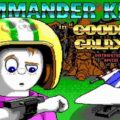
Eight-year-old genius Billy Blaze puts on his helmet and becomes Commander Keen, a pint-sized space adventurer armed with a raygun and a homemade spacecraft. In Secret of the Oracle, members of the Gnosticene council have been captured across the Shadowlands. Rescue missions provide the structure, with players moving across an overhead map before entering individual platform stages. Story rarely gets in the way. The stages are where most of the personality lives.
Pogo sticks make everything better
Movement gives Commander Keen 4 much of its identity. Running and jumping cover the basics, but the pogo stick changes how stages work. One button press sends Billy bouncing high into the air, opening routes to platforms, collectibles and hidden spaces sitting beyond a normal jump.
It can make simple areas surprisingly tricky. A bounce gives you height, but less control. Landing on a narrow platform takes timing. Enemies often sit exactly where you’d prefer to land. The raygun provides another option, yet Secret of the Oracle never turns into a shooting game. Ammo matters, enemy behaviour varies, and running past a creature can be smarter than trying to clear the screen.
Exploration plays a large part too. Levels hide bonus rooms, alternate routes and piles of collectible food. Some areas invite careful searching. Others push you through moving platforms, hazards and enemy patterns with little room for mistakes. It’s very much a platform game from 1991, but its structure gives players plenty to do beyond reaching an exit.
Now it’s running on Amiga
The new release moves Secret of the Oracle onto AmigaOS 68k machines. Players still need original Commander Keen 4 game data, so this isn’t a standalone package containing the original commercial material. Once those files are in place, the Amiga release handles the game itself.
Joystick support makes sense here. Commander Keen started life as a keyboard-driven PC game, but platforming with an Amiga stick gives the conversion a control setup familiar to anyone raised on Commodore games. Keyboard controls remain available, and save support means progress doesn’t disappear at the end of a session. There is one catch. This isn’t aimed at a standard Amiga 500 sitting under a CRT.
The current build expects an upgraded 68k Amiga with RTG graphics and AHI audio. Development has centred on an accelerated Amiga 1200 setup, putting the release closer to modern expanded Amiga configurations than original early-90s hardware.
For players, most of those details disappear once the game starts. Secret of the Oracle still presents its familiar EGA graphics, map screen and side-scrolling stages. It hasn’t received an Amiga-style visual makeover, and it isn’t trying to mimic games originally produced for Commodore hardware. It remains a PC platform game running on an Amiga.
A curious addition to the Amiga library
Commander Keen 4 occupies an interesting spot beside the machine’s established platform catalogue. Amiga owners had access to countless side-scrollers during the early 1990s, yet id Software’s series followed a separate path on DOS PCs.
Bringing Secret of the Oracle across closes part of this old platform divide. The first Amiga release already supports gameplay, sound, joystick controls and saving. Development remains at an early stage, so compatibility across different accelerator setups could vary.
What players get is refreshingly straightforward: the original 1991 adventure, its map, its creatures, its secrets and one of gaming’s most famous pogo sticks, now running under AmigaOS. Thirty-five years later, Billy Blaze has found another computer to explore.
MORE AMIGA & RETRO NEWS
 Two legendary Wing Commander games just got a serious modern PC refresh
 What if Commodore had abandoned everything except Amiga?
 Commander Keen NES turns id Software’s PC classic into a Nintendo game
 Commander Keen 4 3DO port brings the 1991 PC classic to new hardware
 41 years of Commodore Amiga: 41 facts about the legendary computer
 Commander Keen 1 gets a Sega Master System port after 35 years
 Why Norton Commander became a legendary MS-DOS file manager
 Bobby Prince, legendary composer of DOOM, Wolfenstein 3D and Duke Nukem 3D, has died
 Amiga beyond Commodore: how outside companies built its gaming, video and software legacy
 Sun Microsystems history: from UNIX workstations to Java, Solaris, and Oracle
 The Secret of Monkey Island history: development, success, and lasting legacy
 50 Amazing games you can play on AmigaOS 4 and AmigaOne computers
 The 50 best Amiga games of all time: a nostalgic journey through the Commodore era
 How Commander Keen changed the face of MS-DOS gaming forever
 Commander Keen Dreams: Great ’90s MS-DOS nostalgia