
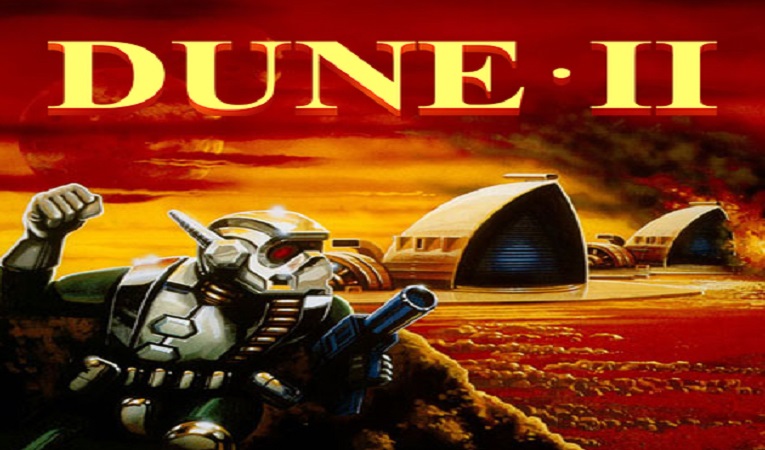
Dune II is getting a serious control upgrade on Amiga. Developer Foxman is modifying Westwood Studios’ original Amiga executable, adding features such as drag selection, multi-unit commands and improved group control. It’s still Dune II underneath. The missions, spice economy, base construction and combat remain in place, but commanding an army is becoming far less fiddly. For anyone used to later real-time strategy games, the difference is immediate. Instead of clicking units one at a time, players can draw a selection box around several units and give them a shared order. Simple idea. Big change.
Dune II finally gets proper multi-unit selection
The current development version supports rectangular drag selection, letting players grab several units at once. Shift-clicking can add extra units to an existing selection, and selected groups can receive MOVE or ATTACK commands together. Multiple selection frames appear on screen, making it clear which units are currently active. Clicking empty terrain clears the selection.
None of this sounds unusual for an RTS in 2026. In Dune II, it changes a major part of the control scheme. Westwood released the original PC game in 1992, followed by an Amiga edition in 1993. Group selection hadn’t yet become one of the standard ideas players expected from the genre. Dune II asks you to command forces unit by unit, which can turn larger battles into a lot of repeated clicking. Foxman’s work tackles this part directly without replacing the original game with a new engine.
More familiar RTS controls could follow
Multi-selection is one part of a larger list of planned features. Control groups are being explored, which could let players assign selected units to number keys. Double-click selection for matching unit types is another possibility, along with attack-move commands and changes to group movement. Production could get similar attention.
Factory rally points and production queues are under consideration, cutting down the repeated input needed when building reinforcements. More detailed unit information may appear too, alongside changes to computer-controlled opponents and possible increases to unit limits.
A higher-resolution version is another major part of the project. Foxman has been working on a play area with twice the original display space, giving players more of the battlefield on screen at once. The aim is to combine the display work with the new controls in one native Amiga version.
Fremen and Sardaukar could become playable factions
The project isn’t limited to controls. Foxman is investigating whether existing parts of Dune II’s code can support playable Fremen and Sardaukar forces. Both groups already exist within the game, but neither works as a standard campaign faction in the original release.
Dune II normally gives players three Houses: Atreides, Harkonnen and Ordos. Each campaign follows the same basic structure. Harvest spice, earn credits, construct a base, produce troops and destroy the opposing forces.
Faction-specific units and technology add differences between the three sides. Turning the Fremen or Sardaukar into playable factions would extend this structure, though the idea remains under investigation rather than a confirmed release feature.
Why Dune II still matters to RTS design
Dune II: The Building of a Dynasty arrived on MS-DOS in 1992, published by Virgin Games and developed by Westwood Studios. European players may recognise its other title, Dune II: Battle for Arrakis. Its basic structure became hugely influential.
Players deploy harvesters to collect spice, use the income to build structures, develop new technology and manufacture military units. Bases grow across each map as opposing Houses fight for territory and resources. Sandworms can attack units travelling across open desert, adding another problem to spice collection.
Earlier games had already experimented with real-time strategy ideas, but Dune II brought many familiar RTS systems together in one clear format. Westwood later developed Command & Conquer, released in 1995, and the genre grew quickly across PC gaming during the rest of the decade.
Warcraft, Total Annihilation, StarCraft and Age of Empires each took real-time strategy in different directions, with group selection and faster unit management becoming standard parts of the interface. Going from one of those games to Dune II makes its age obvious. The basic strategy remains easy to recognise. The controls come from an earlier stage of RTS development.
This isn’t a remake
Foxman isn’t recreating Dune II in a modern engine. The work modifies the Amiga release itself, retaining its original graphics, campaigns and core game systems. New code is being added around areas such as unit selection, commands, production and screen space.
Development is still in progress, so several proposed features may change before release. Multi-unit selection is already working, giving a clear example of how much the interface can change without rebuilding the game underneath. For Dune II on Amiga, one selection box makes a surprisingly large difference.
MORE AMIGA & RETRO NEWS
 Dune City combines Dune 2 with classic SimCity gameplay
 Dune 2 returns as an ambitious Commodore 64 RTS demake
 Command & Conquer, Kane and Joseph D. Kucan: the story behind the legend
 Dune 2000 retrospective: how a legendary RTS remake got buried in the sand
 Warcraft II retrospective: Blizzard’s RTS classic and its lasting legacy
 How Command & Conquer: Tiberian Sun improved on the original C&C games
 Z retrospective: how the Bitmap Brothers made the weirdest RTS of the ’90s
 Dune 1992 Amiga retrospective: the cult classic that blended strategy, story and spice
 Napalm Amiga Retrospective: Amiga’s bold answer to Command & Conquer
 Outlive 25 Remaster: a forgotten real-time strategy game gets a second life
 50 Amazing games you can play on AmigaOS 4 and AmigaOne computers
 The 50 best Amiga games of all time: a nostalgic journey through the Commodore era
 Inside the AI of Dune II on Amiga: the technology that shaped RTS games
 Emperor: Battle for Dune – why this classic RTS still matters in 2026
 5 Most iconic Westwood Studios games for the Commodore Amiga