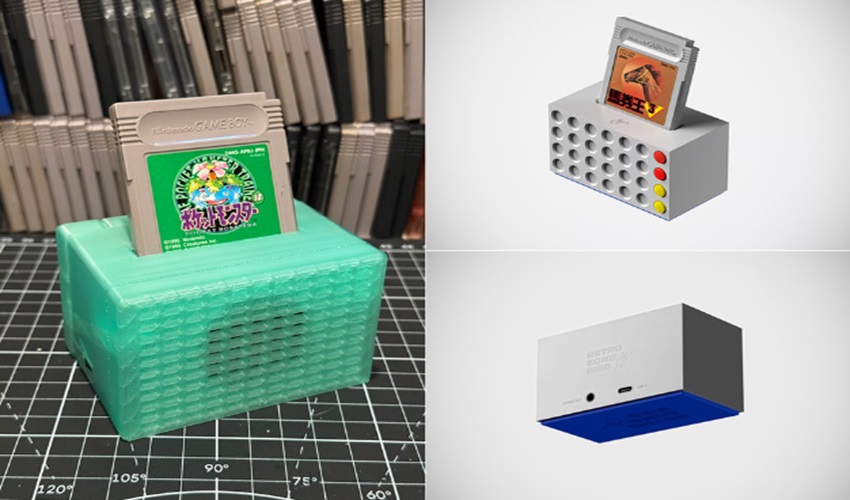
There’s a good chance an old Game Boy cartridge is sitting somewhere in your house, long after the handheld itself stopped getting regular use. The games might be gathering dust, but their music is another matter. A small device called the Retro Song Bird wants to make those soundtracks accessible again, letting you insert an original cartridge and play its music without switching on a Game Boy. It’s a neat idea, and one with a surprisingly long list of features. Developed by Bird Cartel, the Retro Song Bird is a compact music player with its own speaker, physical controls and a cartridge slot. It supports music from more than 1,900 Game Boy and Game Boy Color titles, according to its creators. And playing music is only part of the story.
Plug in a cartridge and pick a track
Using the Retro Song Bird sounds refreshingly simple. Insert a Game Boy cartridge, let the device identify the game and choose which piece of music you want to hear. There’s no game to start, no levels to complete and no need to leave a character standing somewhere so the music keeps playing. The player gives you direct access to the soundtrack through buttons on the device itself.
An integrated speaker handles playback, but you’re not restricted to listening through the little unit. A 3.5 mm stereo connection lets you plug in headphones, external speakers or an amplifier. The compatibility list covers familiar games such as Pokémon Red and Blue, Harvest Moon and Final Fantasy Adventure. Each cartridge effectively becomes a separate music collection, with tracks available independently of gameplay. For anyone interested in the music behind these games, it’s a fairly convenient arrangement.
It’s recreating the Game Boy’s sound, not playing MP3 files
There’s a technical difference between the Retro Song Bird and a regular music player. Game Boy cartridges don’t contain their soundtracks as conventional audio recordings. Instead, they store music data and instructions intended for Nintendo’s original sound hardware.
The Retro Song Bird reads this information and uses register-level emulation to reproduce the Game Boy’s audio system. That means working with four separate sound channels. Two produce square waves, another handles programmable waveforms, and the fourth generates noise used for percussion and sound effects.
It was a fairly limited setup by modern standards, but composers managed to create a surprising range of music with it. The Retro Song Bird reproduces those arrangements without requiring the original handheld. And there’s a useful benefit to having the audio channels available separately.
You can record individual sound channels on your PC
The Retro Song Bird isn’t restricted to casual listening. Connect it to a computer using USB-C and it can deliver four independent audio streams, one for each Game Boy sound channel. For anyone working with audio software, this means individual parts of a soundtrack can be recorded and edited separately rather than captured as one finished stereo recording.
There’s WAV export support for saving music and sound effects, giving users audio files they can work with on a computer. The device supports LSDj cartridges, commonly used for creating chiptune music on Game Boy hardware. MIDI synchronisation is another planned feature, allowing two Retro Song Bird units to work together. These additions make the little speaker considerably more interesting for musicians and people experimenting with classic game audio.
There’s a Game Boy Camera trick hiding inside
Some of the Retro Song Bird’s most unusual features have little to do with listening to music. The device includes tools for reading cartridge ROMs, saving copies of game progress and restoring save data. It can test cartridges and write data to compatible flash cartridges too.
There’s support for the Nintendo Game Boy Camera, which can operate as a webcam when connected to the device. The resulting picture is limited to 128 × 112 pixels at approximately five frames per second.
Don’t expect much detail from a camera released in the late 1990s. It’s an extra feature rather than a serious alternative to modern video equipment, but an interesting one nevertheless. An alarm mode can play music from an inserted cartridge, and the Retro Song Bird keeps a record of previously used games. Bird Cartel plans to provide firmware updates and an open API, leaving room for further software features.
How much will the Retro Song Bird cost?
The Retro Song Bird made its debut on Kickstarter with a funding target of $15,000, passing the initial goal shortly after the campaign opened. Early supporters could order a unit for $59, with the standard crowdfunding price listed at $79. A two-unit package was priced at $150.
Buyers in Europe should account for shipping, VAT and possible import charges on top of those prices. The first deliveries are planned for April 2027. Production is still being prepared, with only a small number of assembled prototypes available so far. As with any crowdfunded hardware project, the delivery date and final specifications aren’t guaranteed.
What makes the Retro Song Bird interesting is how much it manages to put into a relatively simple concept. At its most basic, it’s a speaker for Game Boy cartridges. Connect it to a computer, and it becomes a tool for recording game music, handling cartridge data and experimenting with Nintendo’s original audio system. It’s an unusual combination, but a practical one for people with Game Boy games and an interest in their soundtracks.
MORE AMIGA & RETRO NEWS
 Super Meat Boy Again+ announced for PC with over 300 levels and new content
 MrCART128 brings 16 MB storage and MP3 audio to Nintendo Virtual Boy
 Game Boy Color fans are getting a new R-Type DX cartridge in 2026
 The retro cartridge battery problem is catching up with NES, Game Boy and Sega
 Minicraft 3D brings Minecraft-style gameplay to Game Boy and Game Boy Color
 Best retro handheld gaming consoles 2026: Analogue Pocket, Retroid Pocket 5 and more
 PaperBoyS3 turns an E Ink display into a 60fps Game Boy emulator
 Creative Labs vs AdLib: the sound-card war that changed PC gaming
 A new USB-C adapter could bring classic Game Boy multiplayer into the online era
 OctaMED vs ProTracker: two classic Amiga music trackers compared
 From Turrican II to Symphonic Shades: the lasting legacy of Chris Hülsbeck
 How Soyo Oka shaped the sound of early Nintendo classics
 Anbernic RG Vita Pro review: a comfortable retro handheld with a Vita-style design
 50 Classic Commodore 64 games that made the C64 the king of 80s gaming
 The hidden magic inside retro game cartridges we never noticed