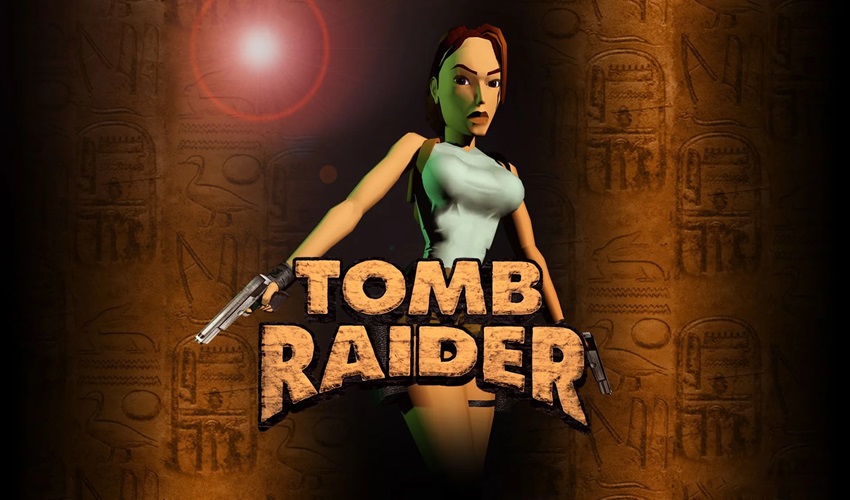
If you’ve ever played Tomb Raider on the Sega Saturn, you’ll understand why this is exciting. The original 1996 release was a remarkable game, but its performance could be rough, particularly in larger areas. Now, three decades later, developer AJBats has managed to get Lara Croft’s first adventure running at 30 frames per second on genuine Saturn hardware. No upgraded console, no faster emulator. It’s the original machine, running a completely rebuilt engine. And the numbers are impressive. An earlier version of the project managed around 12 fps in the same test area. Now it’s hitting 30 fps. That’s quite a leap for a console released in the mid-1990s. There’s still work ahead, but seeing Tomb Raider perform this well on a Saturn is something I never expected to be writing about in 2026. (YT Video)
Tomb Raider on Saturn is getting a second chance
The project is called saturn-tr-remix, and it goes much further than a typical performance patch. Developer AJBats hasn’t simply adjusted a few settings or modified the original executable. Instead, much of the engine has been rebuilt to make better use of Sega’s hardware.
It draws on OpenLara, an open-source recreation of the Tomb Raider engine, with elements from TR1X handling enemy behaviour and traps. The rendering system has been rewritten for the Saturn.
What’s particularly appealing is the decision to retain the original game’s environments and content. The familiar corridors, enormous chambers and awkwardly placed enemies are still here. Lara hasn’t changed, and neither has the adventure. It’s the technology underneath receiving the attention. For anyone familiar with the Saturn release, the prospect of exploring those same locations at a higher frame rate is genuinely exciting.
Sega’s complicated hardware is finally getting some attention
Part of the reason this project interests me is the Sega Saturn itself. It’s a fascinating machine, but its hardware presented developers with some serious challenges. Its VDP1 graphics processor works with quadrilaterals rather than the triangles common in other 3D systems. The console has two Hitachi SH-2 processors, yet making both work efficiently isn’t straightforward. Shared memory access can create bottlenecks, and dividing tasks poorly can cost precious performance.
AJBats has been tackling these problems directly, rewriting the renderer and changing how work is distributed across the CPUs, graphics hardware and digital signal processor. It’s the sort of development work most players will never see. But they’ll certainly notice the result if Lara can move through demanding environments with fewer interruptions.
From 12 fps to 30 fps is a serious jump
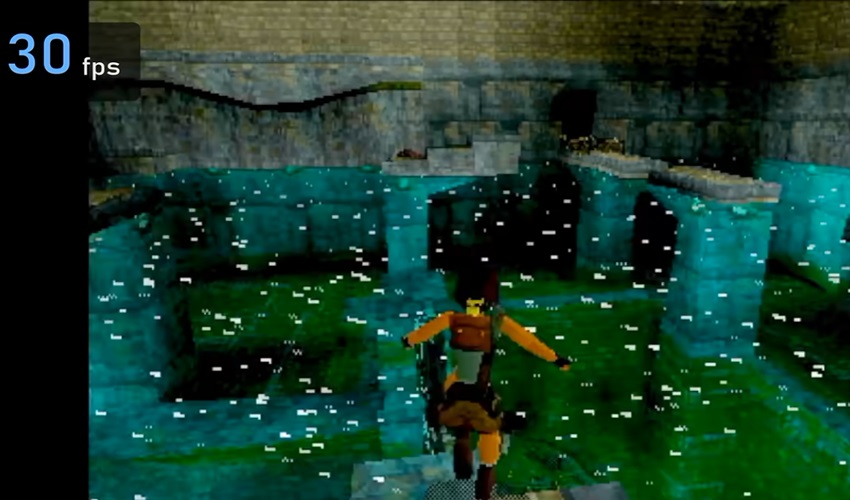
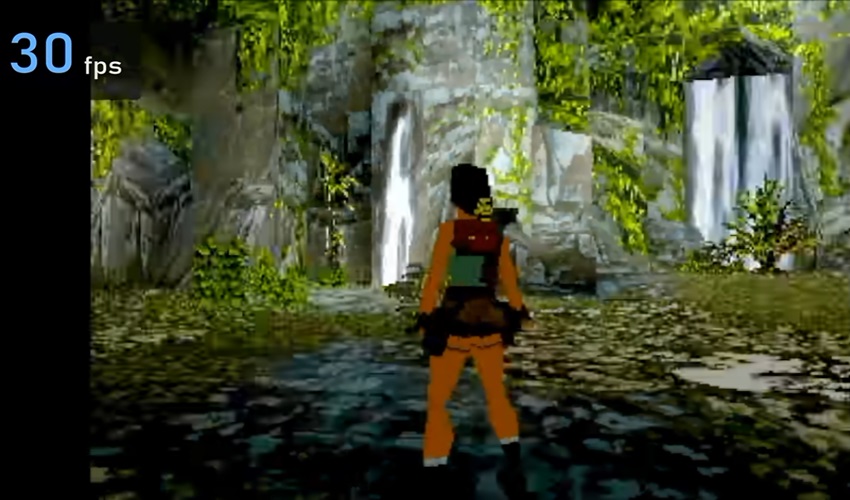
The biggest headline here is the frame rate, and understandably so. During an earlier test, saturn-tr-remix was running at approximately 12 fps in a selected area. Following further optimisation, the same location reached 30 fps on real Saturn hardware. For a game from 1996, running on an unchanged console, it’s an impressive achievement.
Of course, there’s an important distinction. Tomb Raider isn’t suddenly running at a locked 30 fps from beginning to end. Large environments can still place considerable strain on the hardware, and performance needs testing across the entire adventure.
The Cistern is one of the more demanding locations being examined. Anyone familiar with its enormous rooms and complicated layout will appreciate why it’s a useful place to test the engine. I wouldn’t call the job finished yet, but the progress is difficult to ignore.
You can already try an early version
Better still, saturn-tr-remix isn’t limited to a demonstration video. AJBats released the first engineering sample on 10 November 2026. It’s an early build, so don’t expect a polished replacement for the retail game.
Getting it running requires some preparation. The project includes a builder for Windows and Linux, which uses files from the US Saturn edition of Tomb Raider to create a playable disc image. You’ll need your own game assets, including levels, graphics, video and audio.
The resulting image works with Mednafen using a Saturn BIOS, or on original hardware through a Satiator. There’s a nice extra for anyone interested in the differences between console versions. The builder offers an option to use sound effects from the US PlayStation release, which features higher sample rates than many of the original Saturn effects.
There’s more work ahead, but this is already exciting
The engineering sample still has problems. Graphical errors can appear after loading saved games, and the developer has more optimisation and compatibility testing ahead. But I keep coming back to the same detail: 30 fps on a real Sega Saturn.
It’s easy to dismiss frame-rate improvements when modern games regularly target 60 fps or higher. Yet this is an entirely different challenge. AJBats is working within the limitations of hardware from 1994, finding more efficient ways to run a game originally released three decades ago.
For me, that’s what makes saturn-tr-remix so interesting. It’s not trying to turn Tomb Raider into a modern game. It’s exploring how much better the original Saturn experience can run with a different engine.
Whether the finished project can deliver a consistently smoother adventure remains to be seen. But the early results have certainly caught my attention, and I’m curious to see how far AJBats can take it.
MORE AMIGA & RETRO NEWS
 Tomb Raider returns to Amiga with new improvements
 Tomb Raider comes to the Commodore 64 in Raider 64 concept
 Resident Evil 2 Sega Saturn port gets a playable beta release
 Tomb Raider gets another Amiga release, this time built for PowerPC systems
 Sega got Lara Croft first: the real story behind Tomb Raider’s 1996 launch
 Why Lara Croft almost looked completely different in Japan
 Tomb Raider: Legacy of Atlantis remake brings Lara Croft back in Unreal Engine 5
 Kazutoshi Miyake at Sega Europe: the executive who kept Sega fighting in Europe
 Yaba Sanshiro update improves Sega Saturn emulation with new VDP1 renderer
 Could Akiko have saved the Amiga CD32 from PlayStation and Sega Saturn?
 Tomb Raider side-scroller edition is finally available as a free fan game
 Tomb Raider finally comes to Nintendo 64 in ambitious fan port
 Upcoming Tomb Raider side scroller fan project looks like a great lost 90s classic
 Tomb Raider II Saturn release ends 30-year PlayStation exclusivity story
 Classic Tomb Raider looks amazing in upcoming Nvidia RTX remaster