
Actua Soccer 96 on an Amiga? It’s not something anyone would have expected during the 1990s, but Polish developer Terror has made it happen. Gremlin Interactive’s famous 3D football game has received an Amiga port, bringing its polygonal players, moving cameras and international football matches to Commodore’s computer. There’s a catch, though. You’ll need a PiStorm-equipped Amiga to play it. It’s a surprising addition to the Amiga’s football catalogue. After all, this is a computer closely associated with Sensible World of Soccer, Kick Off 2 and their fast, sprite-based gameplay. Actua Soccer came from a different direction entirely, arriving at a time when developers were experimenting with 3D graphics and trying to make sports games resemble television coverage. Now it’s running on the Amiga, albeit with considerably more processing performance than Commodore originally supplied.
PiStorm is the key to getting it running
Terror’s port isn’t aimed at ordinary Amiga hardware. A standard Amiga 500 or an unexpanded A1200 won’t be enough. The game requires PiStorm, an accelerator system using a Raspberry Pi to provide much faster Motorola 680×0-compatible processing. It’s a considerable upgrade, and one capable of changing what an Amiga can run.
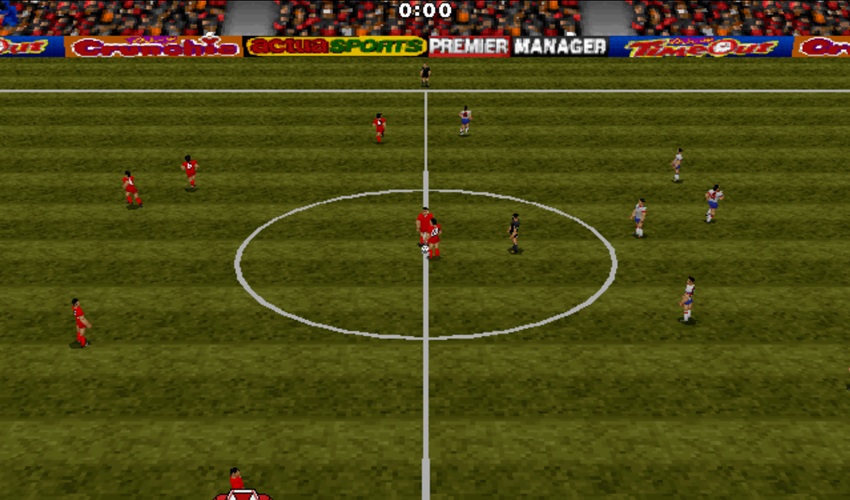
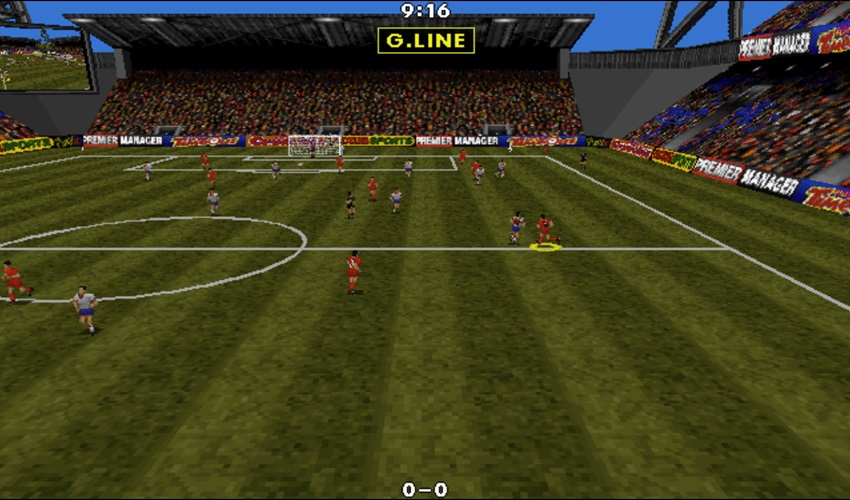
Actua Soccer’s graphics engine was developed for machines with very different capabilities from the original Amiga models. The game uses fully polygonal footballers, multiple camera angles and a three-dimensional playing field. Players run, pass, tackle and shoot across a pitch viewed through moving cameras, with the engine constantly updating animations and positions. It’s quite a departure from the football games most Amiga owners played during the machine’s commercial lifetime.
PiStorm provides the additional processing performance required for such demanding software. Certain configurations can offer expanded memory and modern graphics options too, making them suitable for projects previously beyond the practical limits of standard Amiga systems. The exact performance and supported hardware configurations will depend on the implementation of Terror’s port. The main requirement, though, is clear. You’ll need PiStorm.
Actua Soccer helped change football games in the 1990s
Gremlin Interactive originally released Actua Soccer for MS-DOS in 1995, followed by PlayStation and Sega Saturn versions in 1996. North American players received the game under the name VR Soccer ’96.
At the time, football games were going through some interesting changes. FIFA International Soccer had already established itself, Sensible World of Soccer remained enormously popular, and developers were searching for new ways to present matches. Gremlin’s answer was 3D.
Actua Soccer replaced conventional flat player sprites with polygonal footballers and introduced cameras capable of following matches from different viewpoints. It gave players something visually different from the overhead and isometric football games dominating much of the market.
The Sheffield-based studio took its presentation seriously. Gremlin recorded motion-capture performances involving Sheffield Wednesday players Andy Sinton, Chris Woods and Graham Hyde, using their movements to create more convincing running, tackling and shooting animations.
There was television commentary too, provided by familiar BBC commentator Barry Davies. For a football game released in 1995, it was an ambitious package. And it attracted attention for its technical approach.
There was a proper football game underneath the 3D graphics
Actua Soccer offered international teams, individual player attributes, tournament competitions and multiplayer matches. Players could select different camera viewpoints and adjust match options, giving the experience more variety than its polygonal graphics initially suggested.
Of course, it played differently from Sensible Soccer. Where Sensible Soccer offered immediate control and quick passing, Actua Soccer used larger 3D players and camera perspectives which changed how matches appeared on screen. It was a different interpretation of football, with Gremlin placing considerable attention on player animation and television-style presentation.
The series continued with Actua Soccer: Club Edition, followed by Actua Soccer 2 and Actua Soccer 3. Gremlin used related technology for UEFA Euro 96 England and eventually extended its Actua Sports range into tennis, golf and ice hockey. The original Actua Soccer remains an interesting example of the early transition from two-dimensional sports games to fully three-dimensional productions.
Another unexpected addition to the Amiga catalogue
Developer Terror’s Amiga conversion brings a football game from the PC and console generation of the mid-1990s to hardware never originally intended to run it. And it’s an unusual sight. The Amiga already has an impressive selection of football titles, but Actua Soccer offers something quite different from its better-established games. Its polygonal players, moving camera system and distinctive presentation give it a place of its own. Of course, PiStorm is doing much of the heavy lifting, so this shouldn’t be mistaken for a game running on an original Commodore configuration.
Still, the development is interesting. Polish developer Terror has brought Actua Soccer 96 to the Amiga, with PiStorm acceleration required. For owners of upgraded machines, it’s another 1990s PC and console title joining the Amiga software catalogue, and certainly one of the more unexpected football arrivals.
MORE AMIGA & RETRO NEWS
 MicroProse Soccer 2026 adds modern football competitions to the 1988 C64 classic
 Sensible Soccer meets the C64 in Nick Sherman’s Arlasoft Soccer
 NCAA Football 14 lands on Windows and Linux more than a decade after launch
 41 years of Commodore Amiga: 41 facts about the legendary computer
 Amiga beyond Commodore: how outside companies built its gaming, video and software legacy
 FIFA International Soccer on Amiga retrospective: EA’s football future meets Commodore’s past
 FIFA vs PES: inside the football game battle that changed sports gaming
 GOALS brings free-to-play football to PC during a World Cup summer
 Jon Hare: The British game designer who made the Commodore Amiga unforgettable
 From Kick Off to Goal!: Dino Dini’s lasting impact on football games
 Mundialito 2 brings arcade soccer back to the Commodore Amiga
 Soccer Kid Collection is bringing one of gaming’s strangest football platformers back
 Sensible World of Moon Soccer: when Amiga gamers played football on the Moon in 1994
 The 50 best Amiga games of all time: a nostalgic journey through the Commodore era
 The business model that made Football Manager a global gaming power