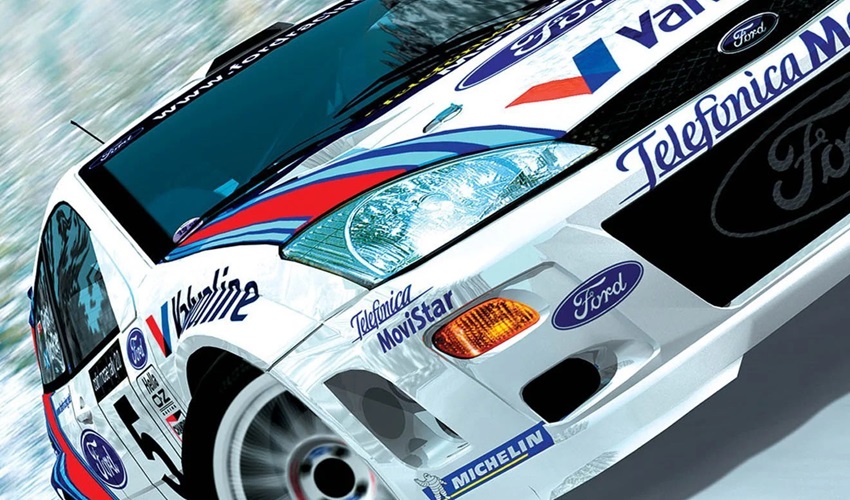
Few racing games get me as excited as Colin McRae Rally 2.0. There’s something wonderfully satisfying about throwing a Subaru Impreza sideways through a gravel corner, listening to Nicky Grist’s pace notes and desperately trying to avoid losing another few seconds after a poorly judged bend. And now, rather unexpectedly, you can experience much of it on an Amiga. OpenCMR2, an open-source reimplementation of the Codemasters racing game, has received a native AmigaOS port for computers equipped with a PiStorm accelerator. It features hardware-accelerated 3D graphics, sound, playable rally stages and network multiplayer.
One of Codemasters’ finest racing games
I’ve always had a soft spot for the approach Codemasters took with Colin McRae Rally 2.0. It wasn’t obsessed with making rally driving unnecessarily complicated, yet it demanded enough concentration and precision to make completing a difficult stage genuinely satisfying.
Developed for Windows and the original PlayStation, the game built upon the foundations of its predecessor with improved graphics, revised handling and a wider selection of racing modes. The vehicle roster included some of the most recognisable rally cars of the period, from the Ford Focus WRC and Mitsubishi Lancer Evolution to the unmistakable Subaru Impreza.
The championship featured eight countries, each presenting its own challenges. Finland encouraged fast driving and spectacular jumps, Sweden demanded careful handling on snow, and Greece punished careless driving across its rocky mountain roads.
And those pace notes! Nicky Grist’s instructions were such an integral part of the experience, particularly during stages where approaching corners offered little visibility. Mechanical damage and repairs between stages gave every mistake an additional consequence.
Codemasters included an arcade mode featuring circuit races against five computer-controlled opponents, alongside individual races and time trials. It was a generous racing package with plenty of variety beyond its main championship.
Colin McRae Rally without PC emulation
What interests me most about OpenCMR2 is its approach to running the original game. Instead of relying on Windows emulation, the project reconstructs the original programming code, allowing developers to adapt Colin McRae Rally 2.0 to different operating systems.
OpenCMR2 covers Windows, Linux, macOS and Android, with the Amiga edition introducing native support for accelerated Motorola 68k systems. The port uses graphics, audio and input routines adapted to AmigaOS, retaining the original vehicles, environments, presentation and driving mechanics.
Seeing a fully textured 3D rally game of this generation running as a native Amiga application is an interesting proposition, especially considering the considerable difference between the hardware requirements of contemporary PC racing games and standard Amiga computers.
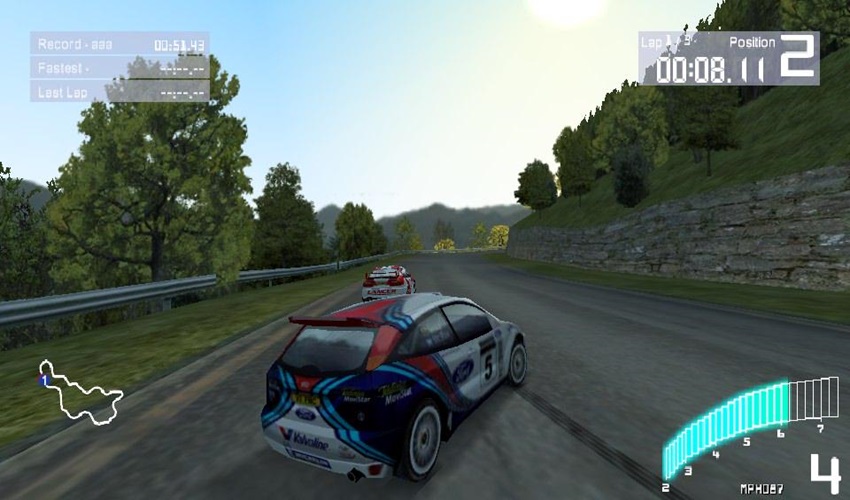
PiStorm takes care of the demanding bits
There is a catch. Your standard Amiga 500 won’t be running this anytime soon. The port targets PiStorm-equipped Amigas running Emu68, with development testing taking place on a PiStorm32 fitted with a Raspberry Pi Compute Module 4 and 4 GB of RAM. Compatibility with traditional Motorola 68040 and 68060 accelerators remains unconfirmed.
Players need AmigaOS 3.2 and RTG graphics supporting 32-bit colour at a minimum resolution of 640 × 480 pixels. The game uses MiniGL for its graphics, with an OpenGL ES rendering option available. You can play in fullscreen or within a window on the Workbench desktop, and AHI handles audio playback.
Rally racing against PC players
Network multiplayer is probably my favourite inclusion here. The prospect of competing against someone running Colin McRae Rally 2.0 on a Linux computer from an accelerated Amiga is particularly appealing. The developers have already tested cross-platform multiplayer between the two operating systems.
The port supports introductory videos, menus, sound effects, music, playable rally stages and saved game progress. It’s not quite the complete package yet, though. Keyboard controls remain the only option for driving, with joystick, gamepad, steering wheel and force feedback support currently missing. I’d particularly welcome proper controller support, since the game’s handling lends itself so well to analogue steering. Vehicle reflections vary depending on the graphics renderer, and three-dimensional audio effects remain unavailable.
You’ll need your original copy
OpenCMR2 is free and open-source, but you’ll need the original Windows edition of Colin McRae Rally 2.0 for its commercial game files. The Amiga port requires a separate installation, since it uses different configuration and driver profile formats.
There’s still development work ahead, particularly concerning controller support and hardware compatibility. For someone with my enthusiasm for Codemasters’ rally series, the prospect of tackling a Finnish forest stage or competing in an arcade race on an Amiga is easily one of the more intriguing applications of PiStorm hardware.
MORE AMIGA & RETRO NEWS
 Screamer Rally returns after nearly 30 years with 4K graphics
 Viper Racing is heading to Amiga, and you can already try the demo
 Sega Rally 2 Native brings the original Model 3 arcade game to Windows
 Colin McRae Rally 2.0 comes to Android with improved graphics options and controller support
 Sega Rally Championship VR is in development for Meta Quest 3
 Over Jump Rally brings classic arcade rally racing into Unreal Engine 5
 Sega Rally 2 Dreamcast online mode returns more than 27 years later
 Sega Rally Championship: how Tetsuya Mizuguchi crashed a rally car during development
 Sega Rally Championship gets an ambitious Nintendo 64 port
 Colin McRae Rally retrospective: the 1998 PlayStation classic that redefined rally racing
 Need for Speed III: Hot Pursuit retrospective: why the PlayStation classic still matters
 This modder’s Ultimate Amiga 1200 turns Commodore’s classic into a retro powerhouse
 Swamp Rally is a charming new GBA homebrew game worth watching
 The 50 best Amiga games of all time: a nostalgic journey through the Commodore era
 From arena shooter to rally racing: Quake3 Rally now available for AmigaOS 4