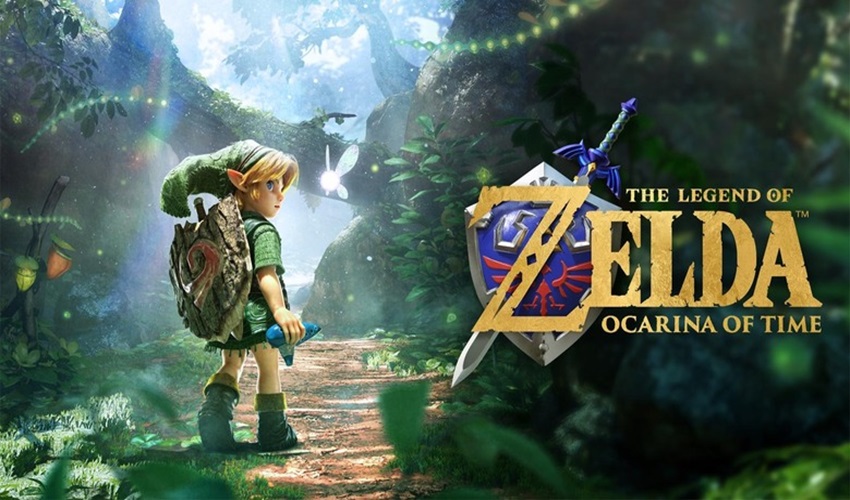
Nintendo has shown more of The Legend of Zelda: Ocarina of Time remake, and there’s plenty to pick through. The Switch 2 exclusive launches on 5 November 2026, with new gameplay showing a rebuilt Hyrule, revised controls, voiced story scenes and several practical changes aimed at making the 1998 adventure easier to play on modern hardware. This isn’t a simple resolution bump. Nintendo has rebuilt the game with new character models, richer environments, fresh lighting and reworked animation, yet the basic structure remains familiar. You’ll still move between Link’s childhood and adult years, explore dungeons, collect key items and face Ganondorf across Hyrule. The bigger changes sit in how the game handles.
Hyrule has been rebuilt for Switch 2
Kokiri Forest, Hyrule Field and other familiar areas now carry far more environmental detail. Buildings have cleaner geometry, vegetation is denser and interiors use modern materials and lighting.
Character models have received a full overhaul too. Link, Zelda and the wider cast now use new designs built around the remake’s updated presentation rather than higher-resolution Nintendo 64 assets.
Story scenes now use voice acting, with extra dialogue appearing across the game. The soundtrack has been rearranged with orchestral recording, and sound effects have received a fresh pass. Nintendo is building the remake exclusively for Switch 2. HDR support is included on compatible displays, with a listed download size of roughly 27GB.
Link can jump and sprint this time
The control changes could end up being more noticeable than the visual work. Link now has a dedicated jump button. In the original game, he jumped automatically after reaching an edge, a system closely tied to the Nintendo 64 controller and camera setup. The remake gives players direct control instead.
A sprint command speeds up movement across wider spaces. Camera control has changed too, with the right analogue stick giving players free control around Link. It sounds basic in 2026. For Ocarina of Time, it’s a major shift.
The original built many encounters around fixed camera behaviour, Z-targeting and limited manual adjustment. A modern camera changes how players read rooms and inspect puzzle spaces. Nintendo appears to be keeping dungeon layouts and progression intact.
Time keeps moving inside towns
Ocarina of Time’s day and night cycle has received a practical change. The clock now keeps running across more locations, including towns where time once stopped. It’s a small tweak on paper, but it changes how Hyrule operates moment to moment.
Characters, events and access points tied to different times of day now sit within a more consistent clock system. Players can inspect rebuilt spaces from angles unavailable in the Nintendo 64 release, giving the remake more freedom without requiring major changes to its map design.
Threads of Time keeps track of the next objective
Nintendo has added a new progress menu called Threads of Time. It records major story events and shows the current objective, giving players a quick reference point after loading an older save. For a game filled with dungeon items, songs, time shifts and repeat visits to previous areas, the feature should cut down on the usual question after a few days away: what was I doing?
The menu presents completed story beats in one place. It doesn’t appear to alter mission order or progression. Its job is simpler: give players a clearer record of where they are in the story. The ocarina gets a new input option too. Players can hum learned songs, with the game recognising the melody and having Link perform it. Music still handles familiar jobs, including puzzle solutions, travel and story events. The new input method gives players another way to trigger songs.
Ocarina of Time remake arrives in November
The Legend of Zelda: Ocarina of Time remake releases on 5 November 2026 for Nintendo Switch 2. From the gameplay shown so far, Nintendo isn’t rebuilding the adventure around a new combat system or a different map. The focus sits on controls, presentation, camera movement, interface design and modern hardware features.
For players familiar with the 1998 release, the changes should be easy to spot. For newcomers, the bigger question is simpler: how does one of Nintendo’s most famous 3D adventures play after nearly three decades of changing control conventions? November will provide the answer.
MORE AMIGA & RETRO NEWS
 Zelda 40th Anniversary Direct: 3 big announcements Nintendo could make
 The Legend of Zelda: The Minish Cap gets an Unreal Engine 5 3D fan remake
 Tears of the Kingdom Online is here with unofficial multiplayer co-op
 The Legend of Zelda: The Minish Cap gets a native Nintendo 3DS port
 The Legend of Zelda: Glass of Fate is an ambitious new N64 style project in development
 Ocarina of Time gets a native iPhone and iPad port
 How Q-Link brought email, chat and games to the Commodore 64
 A new USB-C adapter could bring classic Game Boy multiplayer into the online era
 Nintendo 64 anniversary: why the N64 still matters 30 years after launch
 Zelda: Ocarina of Time Remake for Switch 2 sparks fan worries over big changes
 Zelda: Twilight Princess unofficial PC port adds high resolutions and uncapped FPS
 Star Fox 64 remake brings back one of Nintendo’s greatest space adventures
 Link’s Awakening DX HD PC port updated: classic Zelda running better than ever
 The Legend of Zelda: Ocarina of Time gets an unofficial Sega Dreamcast port
 The legend of Zelda turns 40: a complete look at its legacy and impact