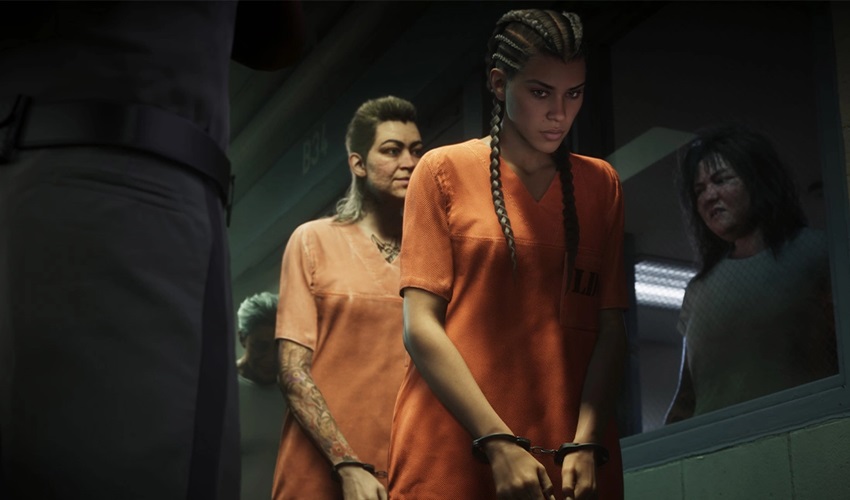
As someone who would much rather experience Grand Theft Auto VI on a gaming PC, I find the latest developments surrounding its unofficial Windows builds genuinely fascinating. Rockstar hasn’t announced a PC version yet, but experimental builds are already rendering detailed environments, character models and ray-traced lighting. We’re no longer talking about a game barely making it past its loading screen. There’s actual gameplay here. Take-Two Interactive has now taken down more than 3,000 GitHub repositories connected to an unofficial recompilation project, but the technical progress is difficult to ignore.
Take-Two removes more than 3,000 GTA 6 PC repositories
On 24 November 2026, GitHub processed a copyright infringement notice from Take-Two Interactive targeting Project Leonida, an unofficial project attempting to run the Xbox Series version of GTA 6 on Windows through recompilation.
The copyright intervention affected 3,007 repositories, including the original project and its associated forks. Take-Two argues the project uses unauthorised Xbox Series game files and violates Rockstar’s software licensing terms.
Development hasn’t stopped entirely. Several independent implementations reportedly remain in development, with some developers moving their work into private repositories. It’s becoming increasingly difficult to establish precisely how far each project has progressed or which technical problems remain unresolved.
GTA 6 on Windows is starting to resemble the actual game
This is where my interest really picks up. At least six experimental implementations have reportedly reached interactive gameplay, with some making it through Lucia’s opening sequence and into Jason’s first mission, Gone Fishing.
Earlier demonstrations featured missing textures, broken character models and considerable graphical corruption. Recent footage presents a much more recognisable version of Rockstar’s latest game. Buildings have textured surfaces, characters have detailed clothing, environmental physics work, and players can move around using a controller.
There’s something particularly exciting about seeing GTA 6 render on conventional desktop hardware before Rockstar has announced an official Windows version. I’ve been particularly interested in how Rockstar’s latest iteration of the RAGE engine might translate to modern PC graphics hardware, and these demonstrations provide an early, albeit imperfect, indication.
Ray-traced lighting is already working
Of everything demonstrated so far, ray tracing interests me the most. Rockstar has invested heavily in the visual presentation of GTA 6, and seeing elements of its lighting system running on Windows is arguably one of the more technically impressive developments.
The Xbox Series consoles share their x86-64 processor architecture and AMD RDNA 2 graphics technology with existing PC hardware. Their software environment, graphics interfaces and memory management operate differently, presenting several challenges for developers attempting to reproduce the console version on Windows.
Recent footage suggests developers have made considerable progress with shader translation and graphics rendering. Ray-traced lighting appears functional in certain scenes, but its accuracy and consistency across the wider game remain unverified. I’d love to see how these environments render at higher resolutions with a proper PC implementation of Rockstar’s engine.
The wait for an official GTA 6 PC release continues
Grand Theft Auto VI arrived on PlayStation 5 and Xbox Series X and Series S on 19 November 2026, leaving PC players waiting for further announcements from Rockstar. I’m particularly curious about potential support for NVIDIA DLSS, AMD FSR, Intel XeSS, higher rendering resolutions and more demanding ray-tracing settings. Rockstar hasn’t confirmed any of these features yet.
For now, the unofficial builds remain an interesting technical experiment rather than a practical way to experience GTA 6. Getting Rockstar’s latest game running on Windows is one achievement. Making it run properly is another matter entirely. And as much as I’d love to explore Leonida on a high-end gaming PC, I’d prefer to do it at 60 FPS rather than three.
MORE AMIGA & RETRO NEWS
 GTA VI meets 1981 PC graphics, and the result is gloriously absurd
 Watch out, Rockstar: Leonida is making surprising progress with GTA VI on PC
 GTA 6 PC scams are spreading, and the malware is worse than you think
 GTA 6’s Weather Channel partnership reveals storms, rain and fog across Leonida
 The great GTA 6 fallout: When millions of gamers suddenly have better things to do
 GTA VI hacker suspect arrested in Amsterdam; police investigate alleged orders for two killings
 GTA 5 Nintendo Switch port cancelled after Take-Two cease-and-desist
 Rockstar’s new GTA modding rules could change everything
 GTA Infected State turns GTA San Andreas into a zombie survival horror game
 Rockstar Games leak reveals GTA 5’s cancelled Liberty City and Zombie DLC
 GTA 3 has found its way onto Nintendo Wii after 25 years
 GTA Online Casino ban leaves Australian players locked out
 You haven’t truly played GTA until you’ve finished these 7 missions
 GTA radio stations explained: the feature that made Grand Theft Auto iconic
 Seen in Liberty City is a must-play mod for GTA 3 and Liberty City Stories fans