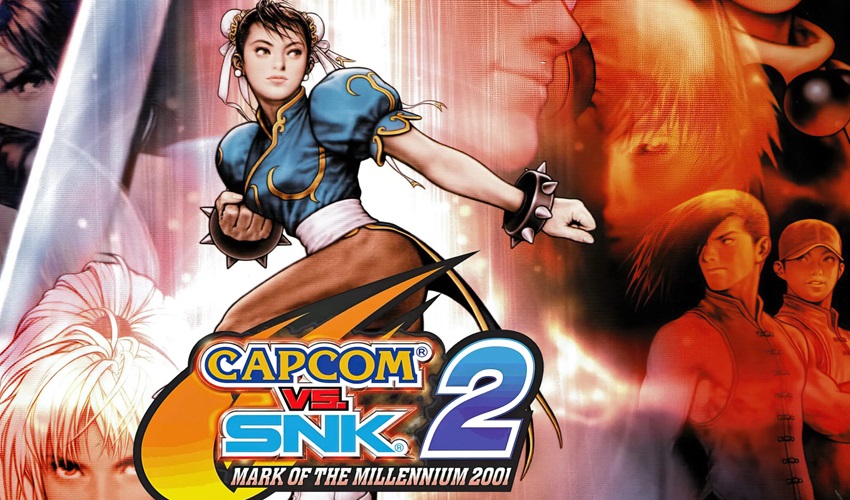
Of the many fighting games Capcom produced during the Dreamcast years, Capcom vs. SNK 2 remains one of my favourites to revisit in writing. There’s something particularly exciting about seeing its name appear alongside the Nintendo 3DS and PSP in 2026. An unofficial decompilation project has reconstructed the original Sega NAOMI and Dreamcast game code, bringing native versions of the fighter to Windows, Linux, Nintendo 3DS, PlayStation Portable and MiSTer. The prospect of playing a full version of Capcom vs. SNK 2 on a Nintendo handheld is wonderful. It’s not necessarily a platform you’d associate with one of Capcom’s most ambitious arcade fighters, which makes this release particularly interesting.
When Capcom and SNK put their differences aside
Capcom released Capcom vs. SNK 2: Mark of the Millennium 2001 in Japanese arcades in August 2001. The original crossover had arrived only a year earlier, but the sequel was a considerably bigger production, featuring 48 playable characters drawn from both companies’ fighting game catalogues.
Seeing Ryu facing Terry Bogard still has considerable appeal. Throw Chun-Li, Mai Shiranui, Kyo Kusanagi and characters from Darkstalkers and Samurai Shodown into the mix, and you’ve got a character selection screen capable of keeping fighting game enthusiasts occupied for ages.
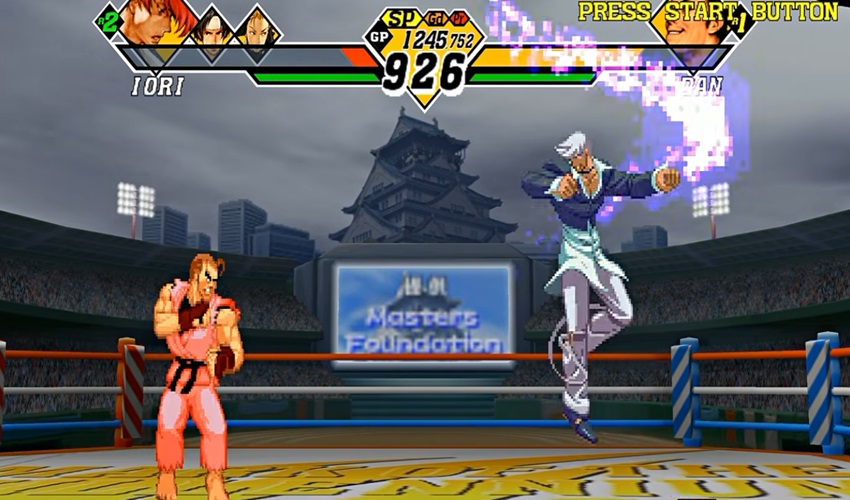
Capcom’s combination of traditional 2D sprites and polygonal environments gave the game a distinctive visual identity. The Japanese Dreamcast and PlayStation 2 editions arrived in September 2001, with revised versions appearing later on the GameCube and Xbox.
Six Grooves made every fight a little different
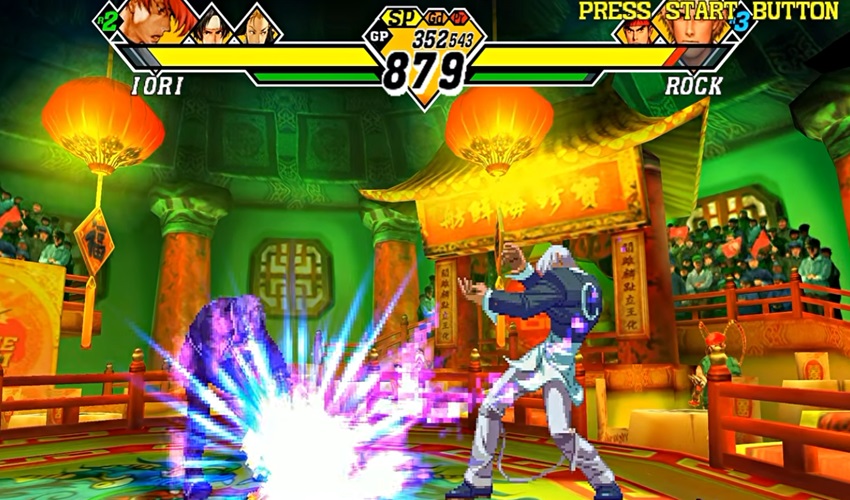
My favourite aspect of Capcom vs. SNK 2 is how much freedom it gives players before a match has started. Choosing your fighter is only half the fun. The six available Grooves introduce different mechanics from Capcom and SNK’s earlier games, affecting movement, defensive techniques and super attacks.
It’s a remarkably flexible system. You can spend hours experimenting with the same character without changing your team. The Ratio system gives players four points to distribute between their chosen fighters. Fancy isn’t needed here: you can pick a single fighter with maximum strength and take on three opponents, or spread those points across a larger team. There’s plenty of room for experimentation, particularly when you start combining characters and Grooves.
Three original editions reconstructed
The decompilation project covers the Japanese and American NAOMI arcade releases and the Japanese Dreamcast edition, which Capcom released under the Millionaire Fighting 2001 subtitle. The developers have achieved complete byte-for-byte matching for each version, allowing the reconstructed code to reproduce the original game programs using the appropriate development tools.
Artificial intelligence played a role in the reverse-engineering process, following a comparable project involving Marvel vs. Capcom 2. It’s the native ports which interest me most. Rather than running the original game through conventional emulation, the project adapts its reconstructed code for different hardware.
Capcom vs. SNK 2 on modern computers
The Windows and Linux editions support configurable keyboard controls, gamepads and arcade fighting sticks. Players can choose between the two arcade releases and the Dreamcast edition, provided they have the appropriate game data.
There’s support for fullscreen and windowed play, adjustable screen scaling and the original 4:3 aspect ratio. Modern graphics hardware can render the game at higher resolutions, with the original gameplay running at approximately 60fps. Free play, arcade configuration settings and Dreamcast memory card functionality feature too.
A rather unexpected Nintendo 3DS and PSP release
The portable versions are easily the most intriguing part of this project for me. Capcom vs. SNK 2 never received an official Nintendo 3DS or PSP conversion, making these adaptations particularly appealing. The Nintendo 3DS edition supports the three reconstructed versions, with older 3DS and 2DS models requiring a different installation format for the arcade releases.
The PSP port concentrates on the Dreamcast edition owing to memory limitations. It features dedicated controls, adjustable screen scaling and processor speed settings. MiSTer owners can run the game through the Pinedra graphics core, with separate launch options for each edition.
Original game files are still required
The unofficial project doesn’t include copyrighted graphics, music or other game assets. Players must supply their own original game data, and the Dreamcast edition’s original online services remain unavailable.
Capcom brought the arcade edition to modern systems through Capcom Fighting Collection 2 in May 2025, but this project offers something different. Having the Dreamcast and arcade editions available as native ports across such a varied selection of hardware is a fascinating development. And personally, the Nintendo 3DS version is the one I’d most like to try.
MORE AMIGA & RETRO NEWS
 The original SNES Star Fox is now playable on New Nintendo 3DS
 An unofficial Persona 3 Portable port is in development for New Nintendo 3DS
 Who said the Dreamcast was dead? Sega’s final console is having an incredible revival
 GTA III, Vice City and Liberty City Stories get native New Nintendo 3DS ports
 Zelda: A Link to the Past 3DS port improves performance on original hardware
 Sonic Colours 3DS brings Sega’s colourful 2010 platformer to Nintendo 3DS
 The Legend of Zelda: The Minish Cap gets a native Nintendo 3DS port
 Counter-Strike on PSP: OpenStrike runs at 60fps with JavaScript
 Inside SPLOOM, the stock market terminal built for the Sony PSP
 Art of Fighting 3 R could be the SNK remaster retro fighting fans were waiting for
 Sega’s last console had a hidden connection to SNK’s Pocket fighter
 Ultimate Marvel vs. Capcom 3 patch sparks backlash after breaking Dark Phoenix
 RG VITA Pro Linux update adds new themes, core switching and better 3DS support
 SNK just gave Katsuhiro Harada his own development studio
 Anbernic RG Vita Pro review: a comfortable retro handheld with a Vita-style design