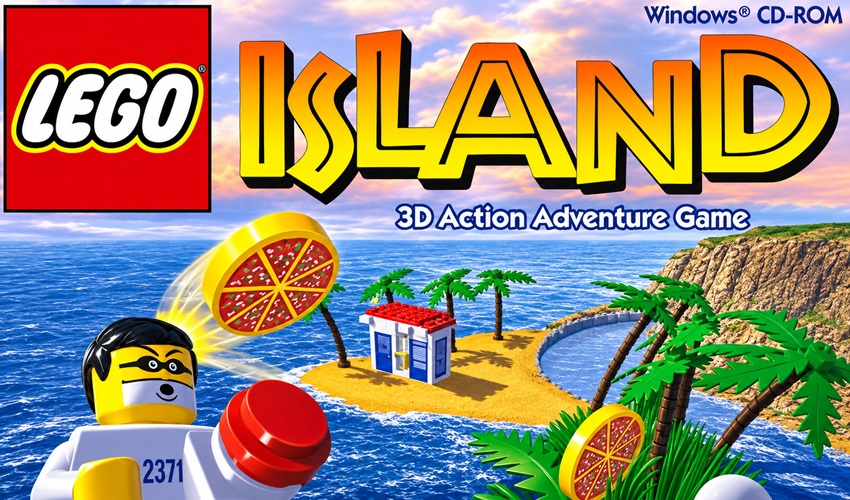
LEGO Island isn’t your typical computer game. One minute you’re delivering pizzas across a colourful little island, the next you’re racing jet skis, building vehicles or chasing a criminal determined to tear the place apart. Mindscape’s unusual 3D adventure has now reached AmigaOS 3, giving Amiga owners a chance to explore one of LEGO’s earliest computer gaming experiments. There’s plenty to do, plenty of strange characters to meet and absolutely no pressure to follow a fixed route.
An island where almost anything can happen
Originally created for Windows in 1997, LEGO Island takes place in a small, fully explorable 3D environment constructed from familiar LEGO bricks. Streets connect houses, shops, a police station, a hospital and the local pizzeria. Vehicles travel around the island, residents go about their business and unexpected activities can interrupt an ordinary trip across town.
It’s an open-ended adventure built around exploration rather than traditional levels. Players can wander through the streets, interact with residents and choose activities at their own pace. There’s no fixed sequence demanding immediate attention, and completing one mission doesn’t automatically push the story forward.
Five characters are available to play, each bringing a different perspective to island life. Pepper Roni handles pizza deliveries and becomes the central character in the main storyline. Nick and Laura Brick work for the police, offering opportunities to take part in law enforcement activities. Mama and Papa Brickolini run the local pizzeria, where food preparation and deliveries become regular jobs.
The game doesn’t take itself particularly seriously. Conversations are filled with peculiar humour, exaggerated reactions and animated characters who rarely miss an opportunity to make an ordinary situation ridiculous.
Pizza deliveries, vehicle building and plenty of distractions
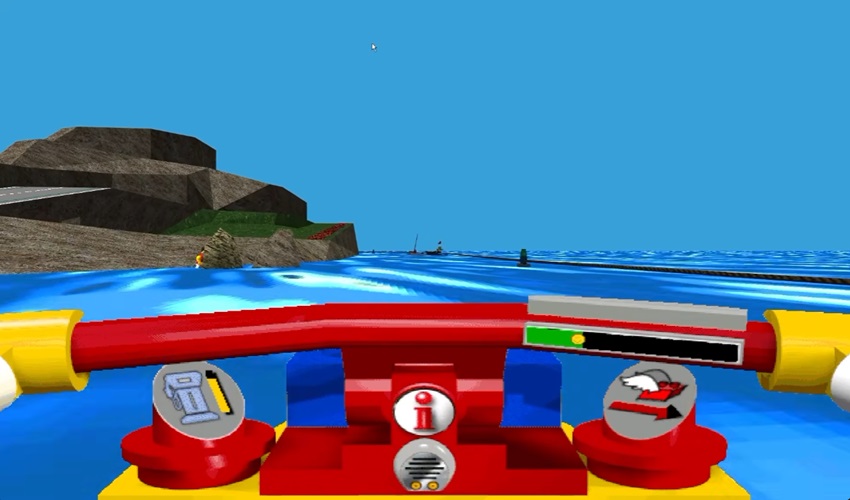
Much of LEGO Island revolves around small activities scattered across its streets and surrounding waters. Pizza deliveries are among the most recognisable tasks. Players collect orders and travel across the island, finding customers before completing their deliveries. Driving challenges offer another diversion, with races testing how well players handle the island’s roads.
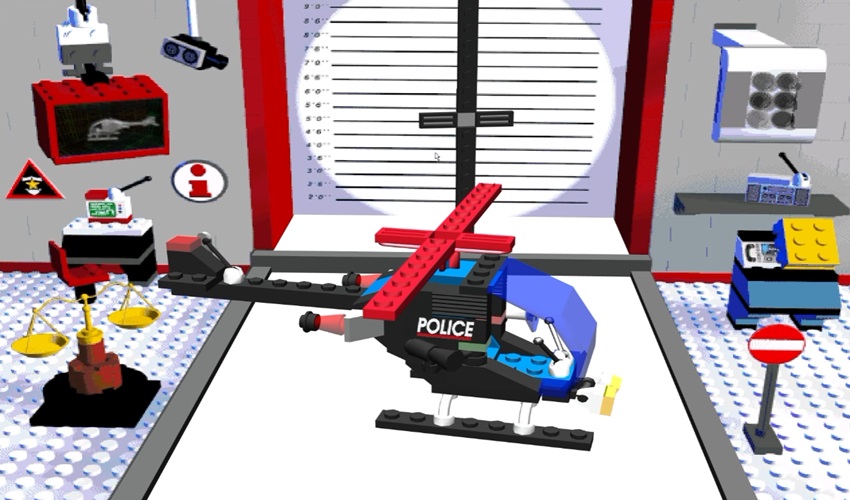
Away from the streets, jet ski racing provides something different. The surrounding water becomes another playground, giving players a reason to leave the town centre and explore the coastline. Vehicle construction is another major attraction. Players can assemble LEGO vehicles from individual components before taking their creations out for a drive, sail or flight. It’s a natural extension of the physical LEGO building experience, presented through interactive computer graphics.
These activities don’t demand lengthy commitments. You can finish a delivery, visit another location and start an entirely different task within minutes. Much of the entertainment comes from discovering what each building or character has to offer.
The Brickster brings trouble to paradise
Beneath the cheerful streets sits LEGO Island’s main storyline, centred on an escaped criminal called the Brickster. He’s an unpredictable troublemaker with a particular interest in dismantling the island’s buildings. His escape sets off a series of events involving Pepper Roni and the local police, turning the normally relaxed island into the setting for a rather unusual pursuit.
The Brickster provides the game with its central conflict, but catching him isn’t the only attraction. Players can spend time racing, exploring and interacting with residents without constantly following his activities.
This freedom was a defining feature of LEGO Island. Instead of concentrating on combat or difficult puzzles, Mindscape created a game filled with approachable activities and cartoon-style storytelling.
The original adventure later received two sequels, LEGO Island 2: The Brickster’s Revenge and Island Xtreme Stunts, which introduced further locations, activities and adventures featuring familiar characters.
How LEGO Island works on AmigaOS 3
The new Amiga port comes from developer phipslk and uses isle-portable, a cross-platform adaptation of the reconstructed LEGO Island source code. It’s not a redesigned edition. The familiar locations, characters, vehicles and missions remain, with the software adapted to run on Motorola 68k-compatible Amiga systems.
There are some demanding hardware requirements. AmigaOS 3.1 or newer is needed, together with a floating-point unit, AHI audio and sufficient Fast RAM. PiStorm with Emu68 and RTG graphics is the recommended configuration. WinUAE emulation offers another option, using an accelerated 68040 setup with JIT compilation.
Native AGA graphics are supported, but run more slowly than RTG. The game targets 640 × 480 resolution in 8-bit colour. Players must supply the original English LEGO Island version 1.1 CD, since the Amiga download doesn’t contain the commercial game assets.
LEGO Island finds another computer to explore
For Amiga owners with suitable hardware, the new port opens access to the complete LEGO Island adventure, from its everyday pizza deliveries to its more chaotic encounters with the Brickster. The attraction remains the game itself: a small interactive world where building vehicles, meeting unusual characters and exploring colourful streets matter as much as completing the main story. And now, those familiar brick-built streets can be explored on AmigaOS 3.
MORE AMIGA & RETRO NEWS
 Guybrush Threepwood finally arrives on the ZX Spectrum 128K
 Escape from Monkey Island returns with an unofficial PC remaster mod
 LEGO PlayStation could become a working PS1 emulator with BrickStation
 Amiga and Hyperion agreement: full breakdown of AmigaOS rights
 The Secret of Monkey Island and Monkey Island 2 get PS1 beta ports
 41 years of Commodore Amiga: 41 facts about the legendary computer
 A LucasArts classic sails onto PS1 with The Secret of Monkey Island port
 Timothy De Groote after 17 months as Hyperion Entertainment director: what has changed?
 LEGO Amiga 4000 build: Commodore classic reimagined as the Amiga CD3200
 The Secret of Monkey Island history: development, success, and lasting legacy
 50 Amazing games you can play on AmigaOS 4 and AmigaOne computers
 The technology of Hunter: how a 1991 Amiga game simulated an entire island
 Retro revival: The Secret of Monkey Island is being developed for the Commodore 64
 The 50 best Amiga games of all time: a nostalgic journey through the Commodore era
 Why return to Monkey Island’s announcement is a big deal