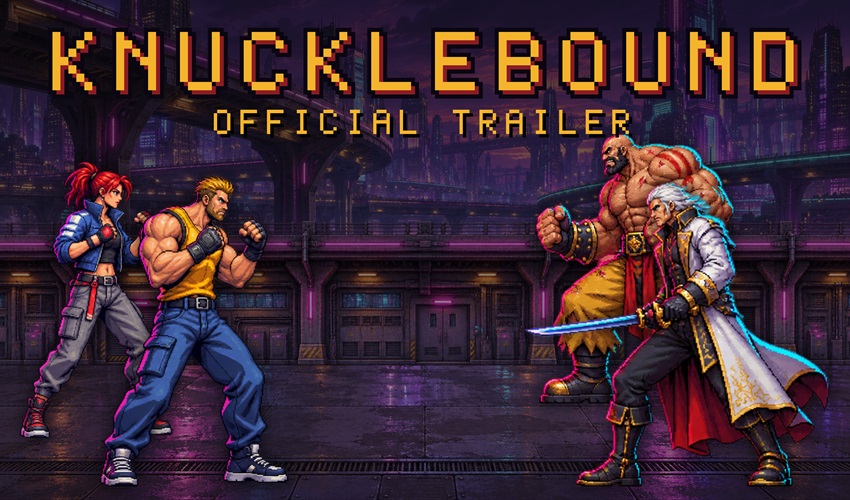
Give me pixel art, street fights, a second player and a few interesting ideas beyond punching enemies, and I’m interested. Knucklebound, the latest release from developer Pier Shaw, offers precisely this combination, with a cyberpunk setting, explorable buildings and railway travel thrown into the mix. Released on 24 November 2026, Knucklebound started life as an Amiga 1200 game, but Shaw’s ambitions extend considerably further. The Commodore 64 gets its own edition, alongside versions for Windows, Linux and Android. There’s a dedicated HD edition for modern computers, too. For someone with a particular affection for arcade fighting games and Commodore hardware, it’s an intriguing release.
More than another street brawler
I’ve always had a soft spot for beat ’em ups with two-player support. There’s an immediate appeal to sharing the action with someone sitting beside you, and Knucklebound includes this familiar feature as part of its arcade-inspired gameplay.
What interests me more is Shaw’s decision to introduce exploration into the formula. Knucklebound doesn’t limit its action to a succession of street fights. Players can enter buildings, explore their surroundings and travel between different locations using trains. Platforming forms another part of the experience, giving the game several ingredients usually associated with action adventures.
It’s the railway travel which particularly catches my attention. You don’t often encounter public transport as a gameplay feature in an arcade brawler. Having somewhere to go between encounters gives Knucklebound an interesting premise, particularly with its cyberpunk-inspired environments and two-dimensional graphics.
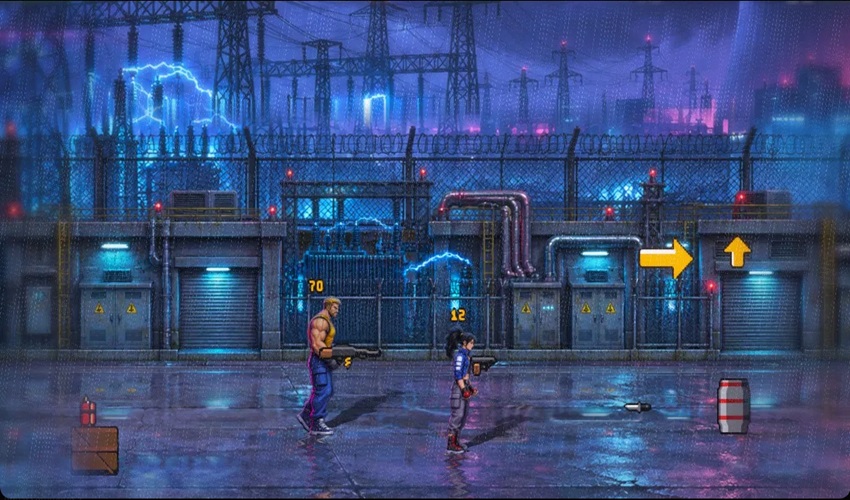
The Amiga 1200 gets another arcade fighter
The Amiga 1200 remains the original target platform for Knucklebound, and I’m particularly interested in this edition. Shaw developed the game around Commodore’s AGA chipset, making use of the hardware found inside the company’s later generation of home computers.
You’ll need a hard drive to run it. The Amiga edition comes in two packages, each aboout approximately 12 MB, including an HDF hard disk image for those using emulation and a separate compressed archive for Amiga installations.
I’ve long enjoyed seeing independent developers work within the technical boundaries of older computers, particularly the Amiga 1200. Its Motorola 68020 processor and AGA graphics architecture provide a different development environment, and Knucklebound represents another addition to its growing catalogue of independently produced games.
A Commodore 64 edition caught my attention
Of the various Knucklebound releases, the Commodore 64 version might be the most unexpected. An arcade fighting game developed around the Amiga 1200 appearing on an eight-bit Commodore computer is an interesting proposition, especially considering the enormous technical differences between the two machines. The Commodore 64 edition comes in a compressed archive measuring approximately 1.5 MB, making it the smallest package in the release.
I’m particularly curious about how the different editions compare. Working with the Commodore 64’s MOS 6510 processor, VIC-II graphics chip and limited memory presents very different challenges from developing for the Amiga’s AGA hardware. Shaw hasn’t provided extensive details about the differences between the two versions, leaving some interesting questions about their respective gameplay and presentation.
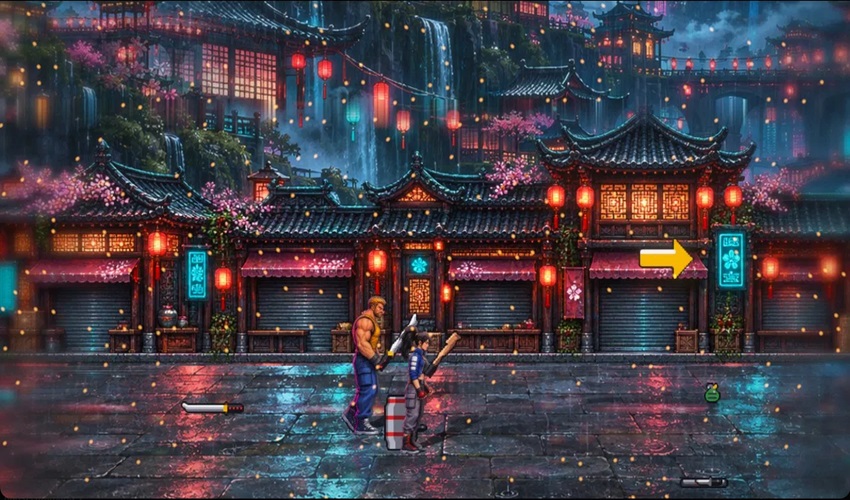
Windows, Linux and Android join the action
You don’t need a Commodore computer to play Knucklebound. Shaw has prepared several editions for modern operating systems, with a particularly interesting selection of Linux builds. Linux users can choose between x86-64, ARM64 and ARM hard-float versions. The standard Windows edition targets ARM32, and there’s an Android installation package weighing approximately 20 MB. It’s nice to see Linux receive this degree of attention from an independent game developer, particularly through the inclusion of multiple processor architectures rather than a single desktop release.
Knucklebound Ultimate brings the action into HD
If pixel art on original Commodore hardware isn’t your preferred way to play, Knucklebound Ultimate offers a separate high-definition edition for 64-bit Windows and Linux computers.
Each Ultimate package weighs approximately 120 MB, a substantial increase over the Amiga and Commodore 64 downloads. Shaw hasn’t detailed every graphical difference, but the HD edition provides another way to experience the game’s combination of fighting, platforming and exploration.
Ten game packages for a dollar
Knucklebound version 1.0 carries a minimum purchase price of US$1, with a single purchase granting access to ten downloadable packages across its supported platforms. What draws me to Knucklebound is its curious mix of familiar arcade mechanics and less conventional ideas.
Street fighting, accessible buildings, train rides and two-player action make for an interesting combination, particularly in a game originally developed for the Amiga 1200. And it’s difficult not to be curious about an independent beat ’em up with editions spanning everything from the Commodore 64 to Linux.
MORE AMIGA & RETRO NEWS
 Carol Shaw, Roberta Williams and Dona Bailey: the women behind early gaming
 Fighting Street MD puts Capcom’s first Street Fighter on Mega Drive
 What if Commodore had abandoned everything except Amiga?
 41 years of Commodore Amiga: 41 facts about the legendary computer
 Art of Fighting 3 R could be the SNK remaster retro fighting fans were waiting for
 What was Lindows? The story of the Linux distro Microsoft took to court
 Super Street Fighter II Turbo on Commodore 64: new C64 update shows serious progress
 Amiga beyond Commodore: how outside companies built its gaming, video and software legacy
 Capcom CPS3 arcade core reaches MiSTer FPGA in new beta release
 This modder’s Ultimate Amiga 1200 turns Commodore’s classic into a retro powerhouse
 Street Racer Amiga retrospective: from console hit to late Amiga port
 What If Commodore allowed Amiga clones? The alternate history of a lost computer empire
 Micronik Infinitiv 1200: Amiga 1200 tower case history, specs, price and legacy
 50 Classic Commodore 64 games that made the C64 the king of 80s gaming
 The 50 best Amiga games of all time: a nostalgic journey through the Commodore era